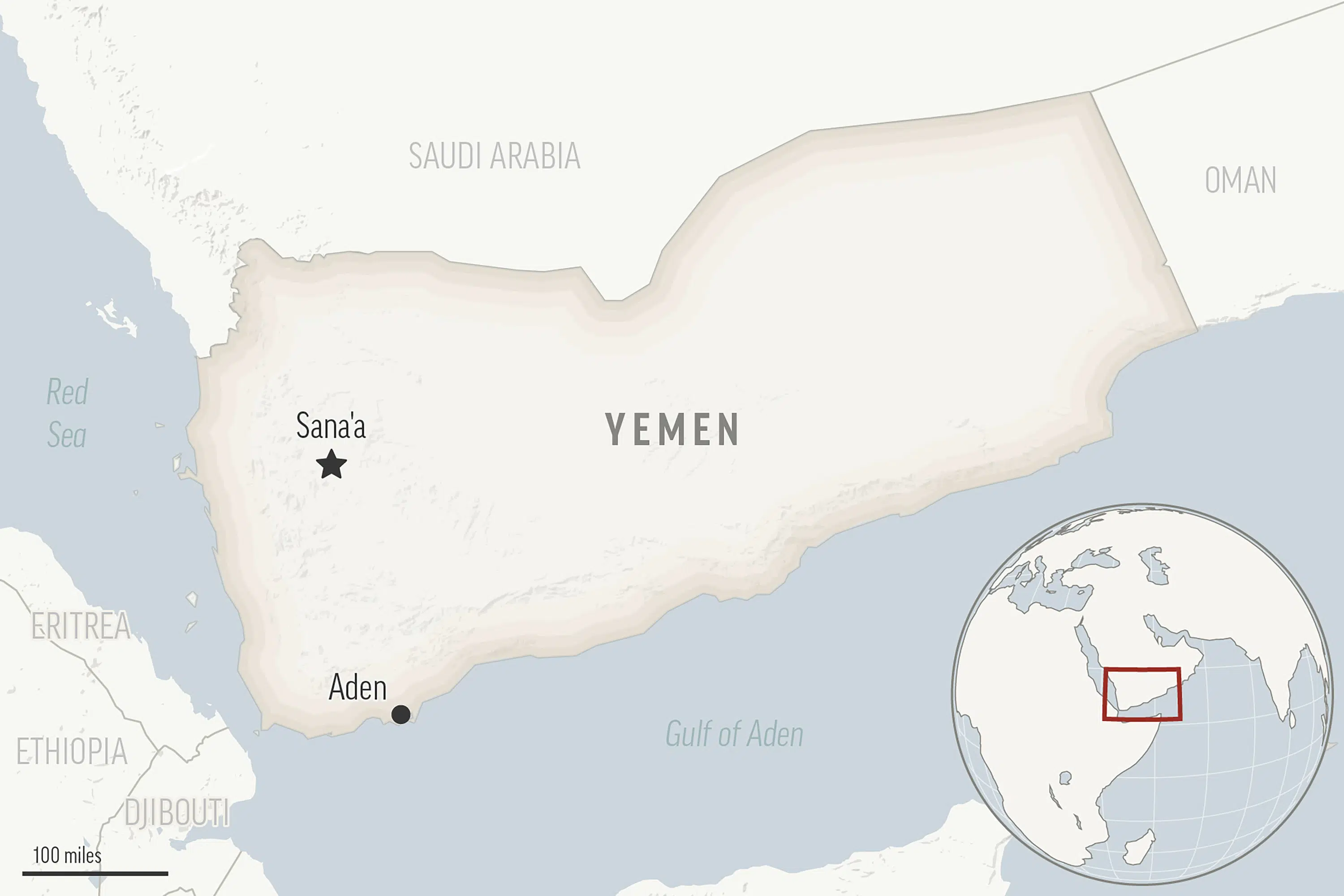
CAIRO (AP) — Yemen’s southern separatists on Friday slammed statements by their ally, the head of Yemen’s presidential council, in which he said that now is not the right time to discuss southern independence.
The comments come as Saudi Arabia, which leads a coalition fighting for Yemen’s internationally recognized government that includes the separatists, and their rivals the Houthi rebels are in back-channel talks on the country’s wider war.
In a statement, the Southern Transitional Council, an umbrella group of heavily armed and well-financed militias propped up by the United Arab Emirates, said that the comments, “showed a lack of seriousness.”
It was in response to an interview published on Thursday in the London-based newspaper “Asharq Al-Awsat,” in which the head of Yemen’s Presidential Council Rashid al-Alami said “talking about a solution at this time might not be appropriate,” in reference to the issue of southern separatism.


The council’s statement said the “southern issue cannot be allowed to be moved or delayed,” it said, adding that it would be in violation of previous agreements between the country’s internationally recognized government and the council.
Reports of revived communications between Yemen’s warring sides in the Gulf Arab country of Oman, a traditional mediator in the Middle East, surfaced earlier this year.
The separatists, represented by Yemen’s Southern Transitional Council, are an umbrella group of heavily armed and well-financed militias propped up by the United Arab Emirates. Though the UAE is officially part of the Saudi-led coalition, its support for the separatists has threatened the alliance. The separatists enjoy loyalty through much of southern Yemen, and have repeatedly pushed to break up Yemen into two countries, as it was between 1967 and 1990.
Yemen’s war began in 2014 when the Houthis swept down from their northern stronghold and seized the capital, Sanaa, along with much of the country’s north. In response, the Saudi-led coalition intervened in 2015 to try to restore the internationally recognized government to power.
Al-Alami, a Saudi ally and currently on a diplomatic tour of Europe, became head of Yemen’s presidential council last April. He told Asharq Al-Awsat that while he supports Saudi Arabia taking the lead as mediator in the Omani-brokered dialogue, any final peace agreement must be between the internationally recognized government and the Houthi rebels.
Yemen’s war has killed more than 150,000 people, according to the Armed Conflict Location & Event Data Project, including over 15,000 civilians, and has become a proxy war in the region. It has also spawned one of the world’s worst humanitarian crises, pushing the Mideast’s poorest nation into near famine.
Source: AP News