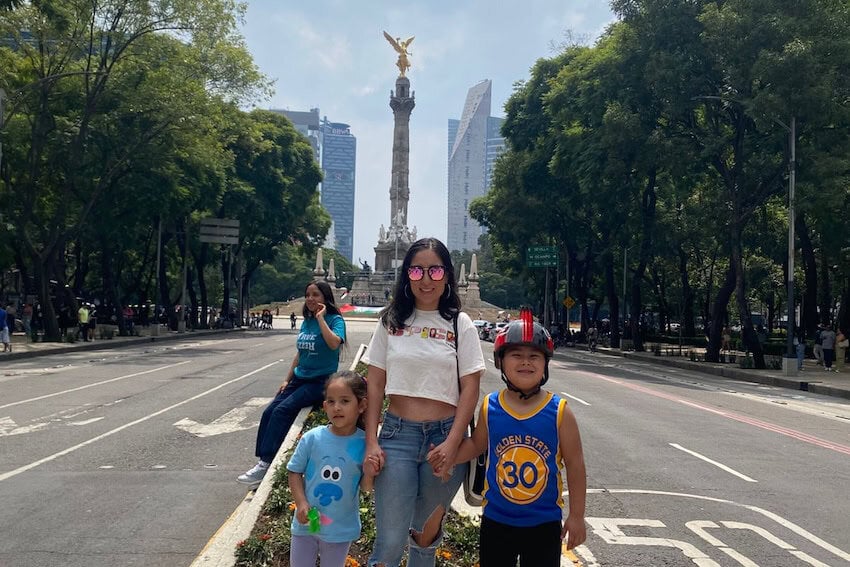
After becoming a mother, Lupita Ramos realized that the pace and demands of New York City no longer aligned with the kind of family life she envisioned. She and her husband made the deliberate choice to relocate to Mexico City, seeking a lifestyle that offered more presence, community, and space to enjoy their growing family.
Lupita’s story is part of Mexico News Daily’s ongoing “My American Dream is in Mexico” series, which explores the rising movement of Mexican-Americans choosing to build their lives in the country their families once left. Through these profiles, the series examines what motivates their return, how they navigate the in-between of two cultures, and the unexpected sense of belonging they often rediscover along the way.
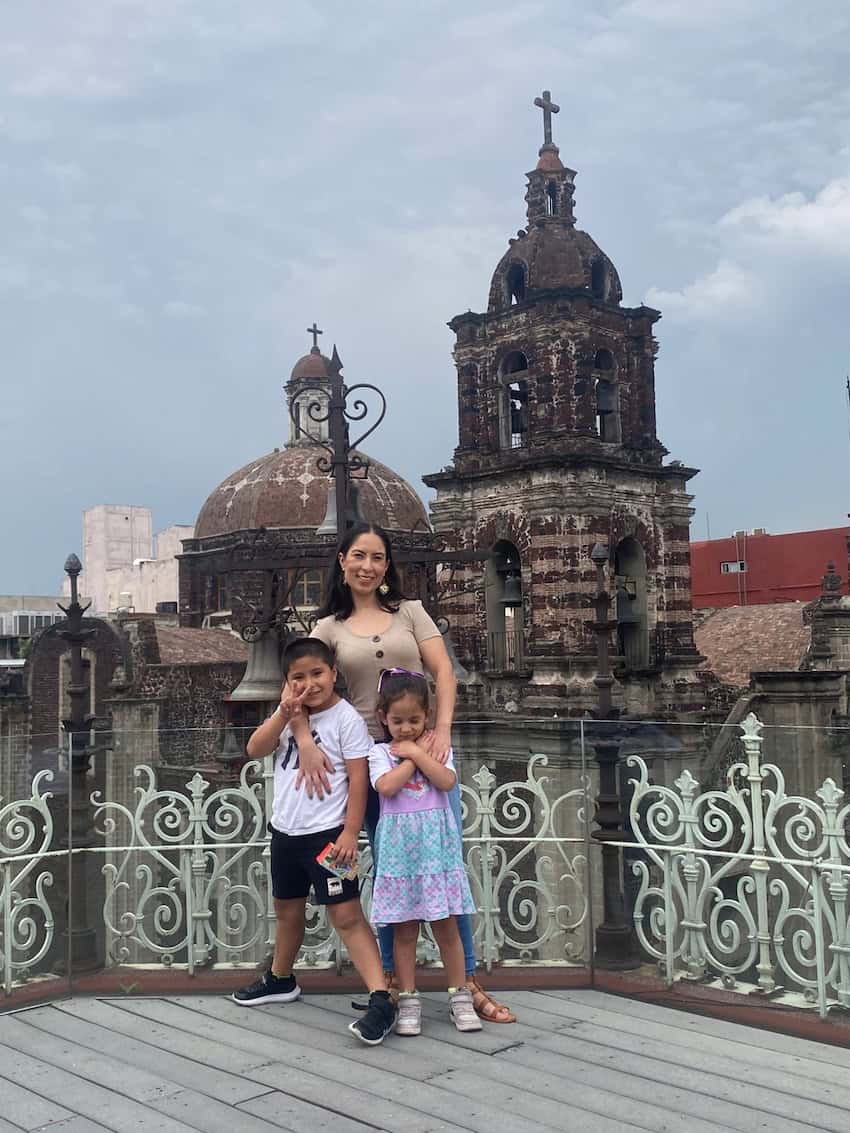
From the Bay Area to New York City
Lupita Ramos was born and raised in the Bay Area, the eldest daughter of Mexican immigrant parents who came to the United States in search of better opportunities. Her upbringing was firmly blue collar, shaped by early responsibility and parents who worked hard to create stability. She grew up in San Bruno, in a neighborhood where Mexican culture wasn’t something you visited — it was the everyday. “You don’t even need to speak English,” she says. “We lived in the section where all the Mexicans lived in. We had all the ties.”
That closeness to community did not mean assimilation came easily. Lupita came of age during a time when speaking Spanish at school was discouraged, even punished. She remembers being reprimanded for using Spanish and being considered for ESL placement simply because she was Mexican, despite being fluent in English. At home, Spanish was nonnegotiable. She was expected to speak it properly, alongside an upbringing steeped in music, traditions, and cultural expression. That immersion would later shape her professional path.




At 18, Lupita began working in Hispanic media, starting in radio promotions geared toward Mexican audiences. From promoting bailes and nightclubs to outreach at soccer matches like Mexico versus the U.S., her early career revolved around cultural spaces she knew intimately. “Everything I’ve ever done has been Mexican,” she says. That throughline carried into corporate media buying, where her cultural fluency became a professional asset and consistently placed her in Hispanic and Latino markets.
Lupita met her husband while attending San José State University, where she also became the first in her family to go to college. He was born and raised in Mexico City, and their connection felt immediate. The two married young, and just five months after their wedding, they moved to New York City after Lupita was accepted into graduate school.

What followed was nearly a decade defined by ambition, movement, and possibility. New York became the place where Lupita fully stepped into adulthood, both personally and professionally. She and her husband traveled often, explored the East Coast, and made their first trips to Europe. “We were living that hustle life,” she says. At the time, motherhood was not yet part of the picture, and New York offered exactly the energy she wanted in her twenties.
A new chapter begins
Turning 30 brought a subtle shift. It wasn’t urgency as much as awareness. Around her, friends and colleagues struggled to get pregnant, prompting Lupita to consider uncertainty for the first time. Despite her academic and professional confidence, motherhood felt unfamiliar. She assumed it might not come easily.
Then it did.
Lupita became pregnant while living in New York, a city she genuinely loved. But as the initial joy settled, she began to imagine what daily life would look like with a child and realized how little space the city allowed for the presence she wanted as a mother. Long commutes, rigid work schedules, and childcare costs clashed with the family life she envisioned. “It just didn’t make sense,” she recalls.
The decision wasn’t about leaving New York behind, but about recognizing that the life she had built there no longer fit what came next. California, where her parents lived, felt like one option. But it was her husband, who had spent nearly 14 years in the U.S., who suggested Mexico. His family was in Mexico City, and the idea of raising their child closer to extended family felt grounding.
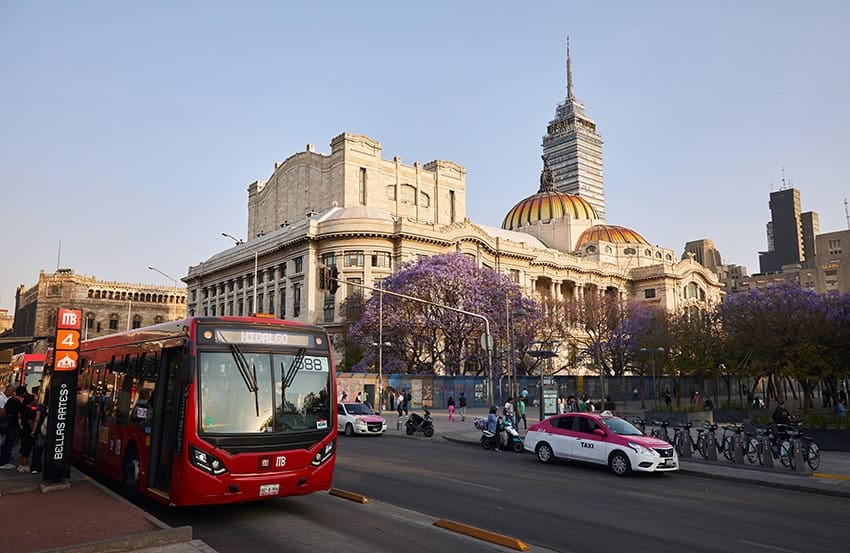
Lupita had visited Mexico City before, but only briefly. “I didn’t imagine a life here,” she admits. Still, the more they talked, the more the move felt less like a leap and more like a natural progression.
She gave birth in the United States in 2018, mindful of healthcare and citizenship. Two months later, once her son received his passport, they moved to Mexico City. What began as practical conversations became a turning point. The city she once knew only as a destination became the place where their life as a family would begin.
The demands of motherhood
Motherhood, Lupita says, is not something you ease into. It arrives fully formed and immediately rearranges everything — time, energy, identity. The change isn’t inherently negative, but it is all-encompassing. Without a strong support system, the weight of that shift often lands squarely on the mother.
“You don’t get a moment to yourself,” she says. “You can’t get sick. You can’t stop. You’re the nurse, the teacher, the comfort — the everything.”
Even with a partner who helps, the balance never feels equal. There are physical realities, like nursing, and emotional ones that are harder to quantify. Lupita describes how a woman’s needs are slowly deprioritized, not by intention, but by necessity. Rest, solitude, and even basic self-care begin to feel like luxuries rather than expectations.
Motherhood also reshapes identity in quieter ways. A woman doesn’t stop being herself, but she becomes layered beneath responsibility. Lupita found herself constantly evaluating her actions, replaying moments in her head, questioning every response. “Was I too soft? Was I too harsh? Should I have cuddled more?” she asks. The mental load, she explains, never shuts off.
She points out how emotionally demanding that responsibility can be, especially when it comes to shaping how children understand the world. Mothers often carry the invisible labor of emotional regulation — teaching empathy, offering reassurance, managing feelings — while also absorbing guilt when things feel imperfect. “Our brains are constantly going,” she says. “That’s why it’s exhausting.”
For Lupita, this emotional weight was one of the clearest indicators that she couldn’t do it alone. The idea of raising children without a village felt unsustainable. In New York, that support felt out of reach. In Mexico, it was built into daily life. When she became overwhelmed, she could call her mother-in-law and ask for help without explanation. “She’s my village,” Lupita says. Sometimes, that help meant something as simple as space. “I would sit on my couch, no TV, no phone, just staring at the wall. Just decompressing.”
That kind of support, she believes, is not a luxury — it’s essential. Motherhood, in all its intensity, becomes more manageable when it is shared. Without that, it is often the mother who carries the heaviest emotional cost.
Motherhood clarified what she needed most, and it reshaped how she viewed the decision to build her life in Mexico City.
A new life in Mexico City
When Lupita moved to Mexico City in 2018, the adjustment was far from seamless. Family members questioned the decision, viewing it as a reversal of sacrifice. She had a master’s degree, a career, and a life in the U.S. Why return to Mexico to focus on motherhood?
At the time, Mexico City felt very different from the version many recognize today. English wasn’t widely spoken in neighborhoods like Condesa or Roma, and Lupita was careful not to stand out. She went from navigating New York independently to feeling constrained by logistics, language, and unfamiliar routines. With a stroller and no sense of the city yet, even simple tasks required planning. Much of her independence faded almost overnight.
Socially, the transition was just as challenging. She arrived into her husband’s world — his family, his friends, his city. Despite being Mexican-American, she was often reminded that she wasn’t Mexican in the way people expected. “People assumed I would adjust easily,” she says, “but being Mexican-American and being Mexican here are very different things.”
What anchored her through that period was her children.
Gradually, Lupita began to rethink success and stability. The American Dream, as she once understood it, no longer felt like the right reference point. In the U.S., providing a certain lifestyle would have required working more and being present less. In Mexico, life moved at a different pace. Family was prioritized. Community shaped daily life. There was room to be present.
Over time, she rebuilt her sense of self. She learned the city the way she once learned New York, slowly and intentionally. She pushed herself to make friends and to show up as more than a mother. “I had to rewire myself,” she says. “You’re more than a mom.”
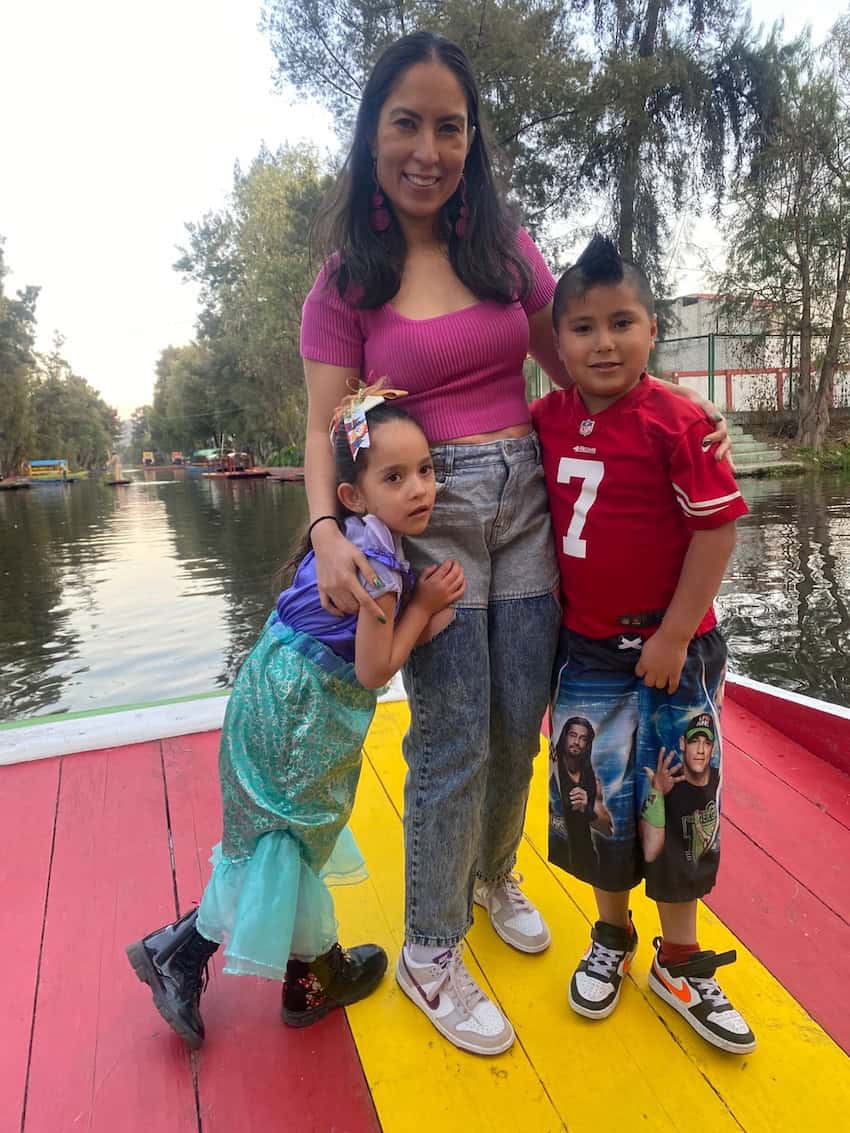
Mexico City became less about adjustment and more about fit. Not perfect and not effortless, but sustainable.
Raising children with new perspectives
Raising her children in Mexico has sharpened Lupita’s awareness of what she wants them to learn beyond academics. In Mexico City, social inequality is visible in everyday life, and she sees value in her children witnessing that reality early on. It allows her to teach empathy, gratitude, and kindness — lessons she feels are harder to cultivate when life is more insulated.
She also notices a difference in how children move through the world. Compared to the U.S., where screens often dominate childhood, daily life in Mexico still emphasizes presence and social interaction. Children accompany adults on errands, greet neighbors, visit mercados, and participate in public life. Family time moves at a slower pace, with shared meals and outings that include children rather than sidelining them.
Her children don’t yet think of themselves as bicultural. To them, Mexico is simply home. They attend school here, prefer Spanish, and feel rooted in their neighborhoods. The U.S. exists more as a reference point, much like Lupita’s own childhood visits to her parents’ rancho in Guadalajara.
That grounding has reinforced her decision to stay, especially given the political and economic uncertainty in the U.S. Knowing her children are bilingual and able to move between countries if needed offers reassurance, but for now, she feels their environment supports the values she wants to pass on.
Education remains the one area where she feels conflicted. Mexico’s private school system can be insular and highly stratified, and she’s aware of the bubble it creates. While her son attends a school that works for their family, she wishes there were more diversity and broader exposure. It isn’t ideal, but it’s a compromise she’s willing to make — for now.
Looking ahead
Lupita doesn’t feel the need to define the future too rigidly. She imagines her children eventually experiencing life in the United States — high school, prom, sports, college — while remaining grounded in Mexico. What matters most to her is flexibility and the ability to respond to different seasons of life.
“Yes,” she says, “I’m definitely living the Mexican dream.”
The American Dream, as she experienced it, centered on possibility through achievement. Education, income, upward mobility. In Mexico, the focus has shifted. It’s less about accumulation and more about the kind of life being built. The pace is slower. Time feels less scarce. Family and community shape daily life.
Lupita is clear-eyed about the tradeoffs. Not everything is easier, and systems work differently. But for this chapter, the values Mexico reinforces align with what she wants for her family. After years of hustle and movement, she has chosen a life that leaves room to dream — not just about what her children might become, but about how they will live.
Rocio is a Mexican-American writer based in Mexico City. She was born and raised in a small village in Durango and moved to Chicago at age 12, a bicultural experience that shapes her lens on life in Mexico. She’s the founder of CDMX IYKYK, a newsletter for expats, digital nomads, and the Mexican diaspora, and Life of Leisure, a women’s wellness and spiritual community.
Source: Mexico News Daily