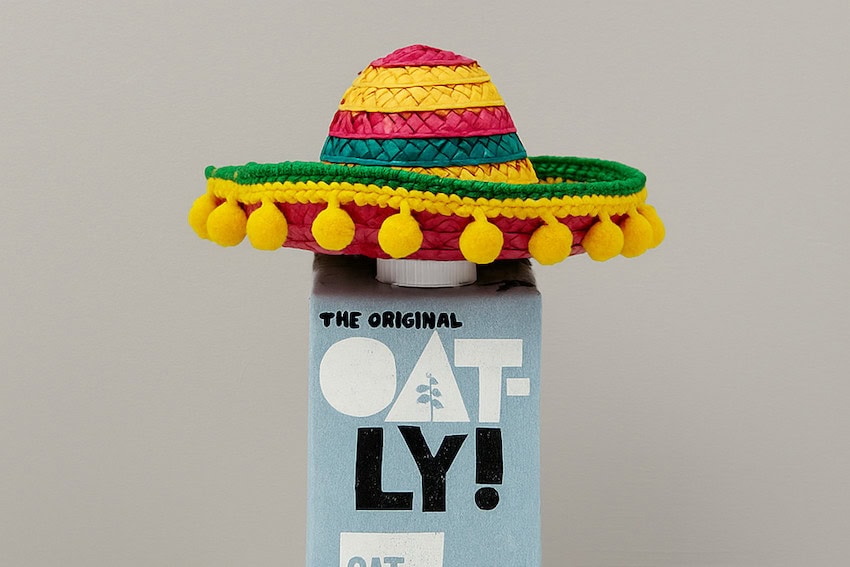
The billboard appeared overnight on the side of a building next to my apartment in Mexico City’s Condesa neighborhood, its English text standing out against the morning sky: an Oatly advertisement. In English. In a country where nearly 95% of the population speaks Spanish. As I passed by, I observed how the Swedish oat milk brand’s latest activation settled into the visual landscape of my neighborhood, with its quirky messaging that had made the company famous worldwide.
Why did I care about this marketing campaign? Firstly because I’m a university professor teaching Marketing and Branding at Parsons School of Design in New York City, so I notice these things with the obsessive attention of someone who dissects campaigns for a living. Secondly I own a juice bar café here in Mexico City. That makes Oatly’s particular over-processed brand of plant milk both fascinating to study and troubling to witness succeed.
The billboard was just a small piece of the series of activations launched by the company in its efforts to penetrate the Mexican market. Over the following months, Oatly’s English-language advertisements would continue to appear on walls and billboards across Condesa, Roma Norte and Hipódromo — neighborhoods at the center of Mexico City’s ongoing gentrification debate. Each ad would maintain the Swedish brand’s signature aesthetic: quirky and consistent with their global approach, regardless of local linguistic preferences. They ignored what we in the marketing space call “transcreation” — the adaptation of advertising content to accommodate different audiences and cultures.
My initial reaction was dislike. Beyond the language choice and disregard for Mexican cultural recognition in Oatly’s visual advertisements, I had concerns about the product itself. While Oatly has gained popularity among baristas worldwide for its ability to steam Oat Milk into a creamy foam, the product contains ingredients and fillers that research has linked to numerous health problems. As if Mexico didn’t have enough public health issues already.


Yet even as I bristled at the campaign cues around me, I begrudgingly had to acknowledge the marketing smarts of the Oatly team.
A calculated approach
Oatly’s recent Mexico City campaign wasn’t simply advertising; it was a calculated market penetration strategy that didn’t rely on simple placement of ads around the city and hope for results. It was an approach that demonstrated sophisticated market research and planning.
First came the coffee shop partnerships. Oatly’s Barista Blend appeared in over 100 specialty coffee shops across the city — from the popular Panadería Rosetta to Roma Norte favorite Café Tormenta. They began with pop-up events, offering free coffee made with their product, a sampling strategy that’s been proven effective time and time again.
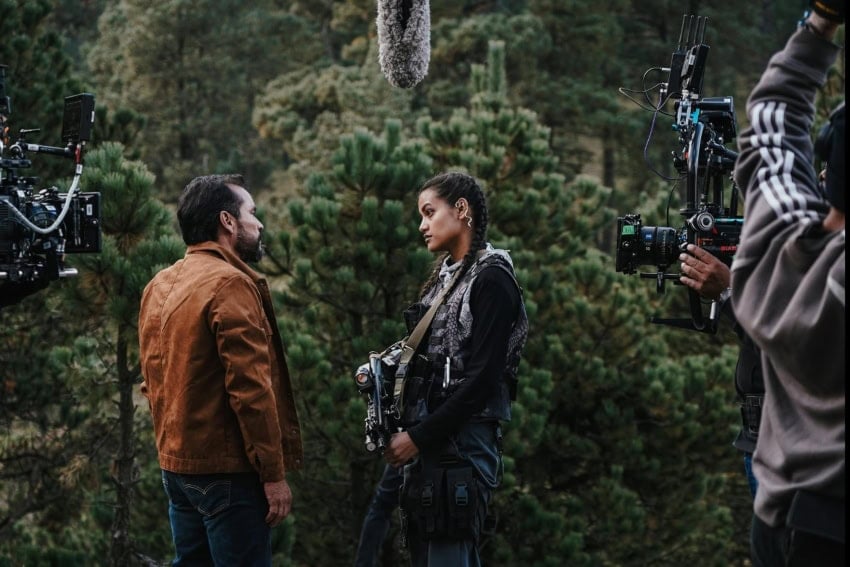
Oatly’s team also released short films distributed on video and their social media platforms, including notable cafes, streets and parks in Mexico City, and interviews with baristas and residents.
But here’s where Oatly showed they’d done their homework beyond mere demographic analysis. Within their broader campaign were moments of genuine cultural insight that caught even my skeptical attention. Most notably, they incorporated references to “Se compran colchones,” the ubiquitous audio recording that echoes through Mexico City’s neighborhoods as buyers in pickup trucks drive around soliciting used mattresses, refrigerators and washing machines.
If you’ve lived in Mexico City for more than a week, that recording is seared into your consciousness. It’s become so omnipresent that it’s become a cultural artifact — the unofficial soundtrack of urban Mexico. Oatly’s creative team adapted the recording and enlisted their own pickup truck to drive around broadcasting Oatly’s product taste and benefits — “Cremoso y vegano” — in the same style of the ubiquitous recording. That Oatly’s creative team recognized this phenomenon and wove it into their activations suggested a level of cultural fluency that their English-only advertising seemed to contradict.
The paradox
Which brings us to the elephant in the room: Why advertise in English in a Spanish-speaking country? It’s not a lack of budget for translation. The answer lies in both Oatly’s strategic calculations and its bold confidence as a brand.
The neighborhoods targeted — Condesa, Roma Norte, Hipódromo — aren’t chosen at random. These are Mexico City’s cosmopolitan epicenters, home to the city’s young professionals, expats and English-speaking elite. They’re also the neighborhoods where conversations about gentrification and foreign influence burn hottest, making Oatly’s linguistic choices feel less like oversight and more like provocation. Oatly’s visual advertising’s disregard for the host country language doesn’t only appear to be unique to Mexico. In fact, Oatly’s use of English extends globally — even, as it appears, to their campaigns in Paris.
And provocation, as it seems, is one of Oatly’s tactics. The brand has built its global reputation on controversy as marketing fuel, transforming criticism into engagement and debate into brand awareness. Every angry tweet becomes content, every complaint becomes conversation. It’s a strategy that requires corporate nerves of steel and a thick skin, but it works.
The numbers support this. Oatly has dramatically increased its presence across Mexico City’s supermarkets and coffee shops, and the brand has announced expansion plans for Guadalajara, Monterrey and San Miguel de Allende, suggesting their approach has been commercially successful.
What that means for the controversy surrounding Mexico’s rapidly gentrifying neighborhoods, however, is an even hotter debate.
Monica Belot is a writer, researcher, strategist and adjunct professor at Parsons School of Design in New York City, where she teaches in the Strategic Design & Management Program. Splitting her time between NYC and Mexico City, where she resides with her naughty silver labrador puppy Atlas, Monica writes about topics spanning everything from the human experience to travel and design research. Follow her varied scribbles on Medium at medium.com/@monicabelot.
Source: Mexico News Daily