The museum added that this year-end showcase will look at extinctions and dinosaurs over 400 million years of Earth’s history.
BRINGING SPECIMENS HOME, DIGITALLY
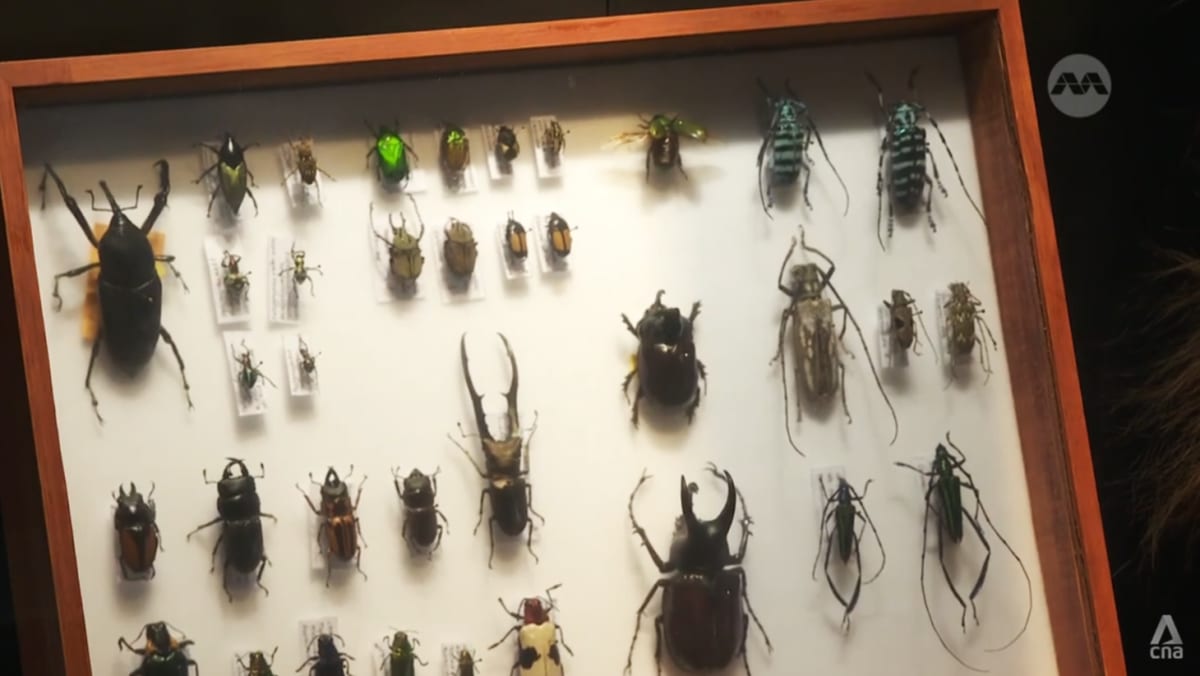
The LKCNHM is also expanding its digital collection.
The Singapore in Global Natural History Museums Information Facility (SIGNIFY) project is an effort by the museum that created a digital biodiversity archive.
Its aim is to digitally reunite the “thousands upon thousands of natural history specimens” collected from Singapore long ago but are now scattered across the world, said LKCNHM’s biodiversity histories lead Martyn Low.

SIGNIFY works with natural history museums and repositories globally to digitise historically important specimens from Singapore, document them for the Singapore context and facilitate their research.
Mr Low added that the SIGNIFY team works to digitise specimens at high resolution for everyone to freely access online.
Many of these specimens were collected by naturalists and explorers across different time periods, when Singapore did not have a museum dedicated to natural history, he said.
Mr Low added that they form a very rich part of Singapore’s biodiversity history.
One such specimen that the project has digitised is the Hope’s longhorn beetle, or Remphan hopei.
This beetle is the first species of insect from Singapore to be given a scientific name, according to SIGNIFY.
A type specimen, or a sample that defines the species, of this beetle is currently located at the Natural History Museum in London.
“If the specimen is in London… only observed in London and studied in London, it is divorced from where it was first collected and where it used to live,” said Mr Low.
He explained that if it was digitised and brought back to its original habitat, people can better understand what Singapore’s natural history was like.
As part of Singapore Art Week 2025, SIGNIFY placed a digital specimen of the beetle at a rainforest area in Bukit Timah, where Mr Low believes it was possibly collected in the past.
He added this was done so visitors can better understand the origins and natural habitat of such specimens.
Mr Low said: “We are trying… to digitally reunite the specimens with their home, which is Singapore, where they were once collected.”
Source: CNA