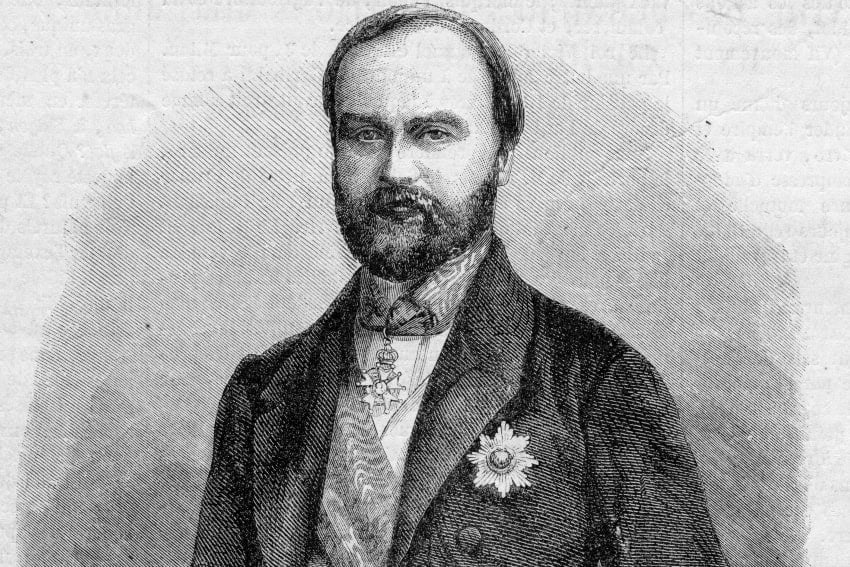
Perhaps the most striking thing about the checkered career of 19th-century French diplomat to Mexico Jean Pierre Isidore Alphonse Dubois is that it seems impossible to find anyone who ever had anything good to say about him. Historian Edward Shawcross summarized him as “vain, arrogant and obstreperous,” a man who showed “a singular talent for offending nearly everyone he met.” The French 19th-century General Cluseret called him “the personification of the evil genius of France.”
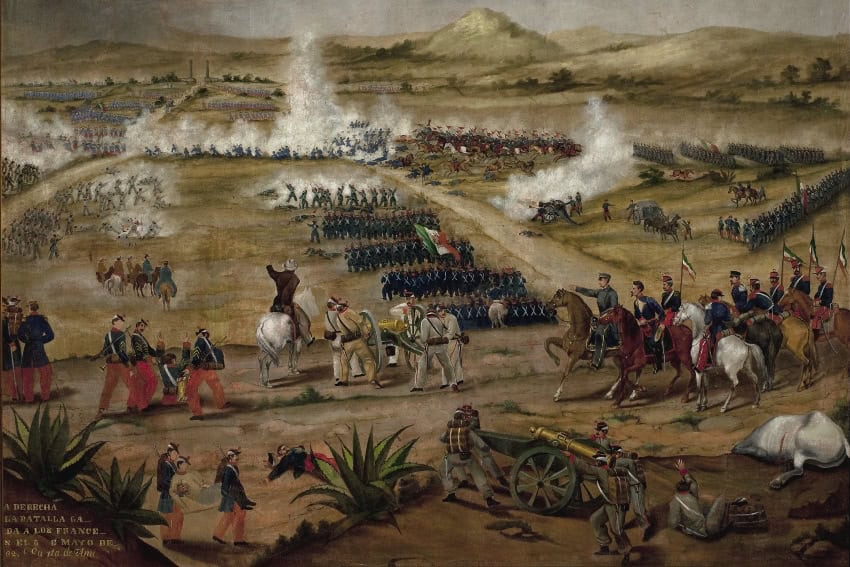
Yet, Dubois played an important role in Mexican history: It was largely on his poor advice that, in 1862, a tiny French force of 7,000 men marched from Veracruz, intending to occupy Mexico City. It was a campaign that ended in disaster for the French with their famous defeat at the Battle of Puebla — an event still celebrated today in Puebla and marked in other parts of the world with plenty of beers as Cinco de Mayo.
France’s social-climbing diplomat
Jean Pierre Isidore Alphonse Dubois, born in the French town of Saint-Martin-du-Vieux-Bellême in 1809, came from a middle-class family — his father had been a tax inspector. Alphonse Dubois enjoyed neither the rank nor the money to secure a position in the diplomatic service, so he found a rich patron in Prince Ferdinand, the Duke of Orleans. The two men met either in school or on the barricades during the political protests that rocked France in 1830.
Thanks to the Prince, Dubois was given a diplomatic posting to Greece, followed by a posting to the United States. These were turbulent times on that side of the Atlantic, with Texas having just declared independence from Mexico. In 1839, Dubois visited Texas at a time when it was uncertain if it would remain an independent nation, return to Mexico or secede to the U.S. His reports to the French Foreign Minister were a major influence on his government’s decision to recognize Texas’s independence.


Appointed as the head of the new Texan legation, it was at this point that he started referring to himself as “Dubois de Saligny,” a suggestion of a noble past that did not exist.
The ‘Pig War’
Dubois was soon upsetting people, openly siding with Sam Houston in his political battle with Mirabeau Lamar and being seen as too passionate a supporter of the Catholic Church. Then came the “Pig War” in Texas, an event that started as a private quarrel between Dubois and a local hotel owner, Richard Bullock. It seems that Bullock’s pigs had invaded Dubois’s barns, and perhaps even his house. Pigs were killed, servants were beaten and threats were made.
Implying that any insult to France’s ambassador was an insult to all of France, Dubois demanded that the Texas government punish Bullock. Unfortunately for Dubois, there had been a change in the Texas government, with Mirabeau Lamar now in charge.
Unable to get satisfaction, Dubois broke diplomatic relations with Texas and deserted his post, basing himself in Louisiana. The news that France was in a dispute with Texas and that their ambassador was absent from his post came as something of a surprise to his political masters in Paris! When Sam Houston’s administration returned to power, it offered Dubois compensation, and the matter was settled. While national pride had forced France to defend its ambassador, the foreign ministry was not happy at being put into such a situation. For the next decade, Dubois was given only occasional and minor postings.
Dubois in Mexico
Why, then, in 1860, Dubois was recalled to the diplomatic service and sent to Mexico is uncertain. It was intended to be a temporary posting, covering for Comte de Gabriac while he took leave. Having not been popular in his role, the count might have recommended Dubois, believing he was of similar conservative views and the same professional mediocrity. Once the position had been confirmed, people were anxious to meet with Dubois, men such as an American senator with dreams of building a railway in Mexico. The post was probably proving lucrative long before Dubois sailed for the Americas.
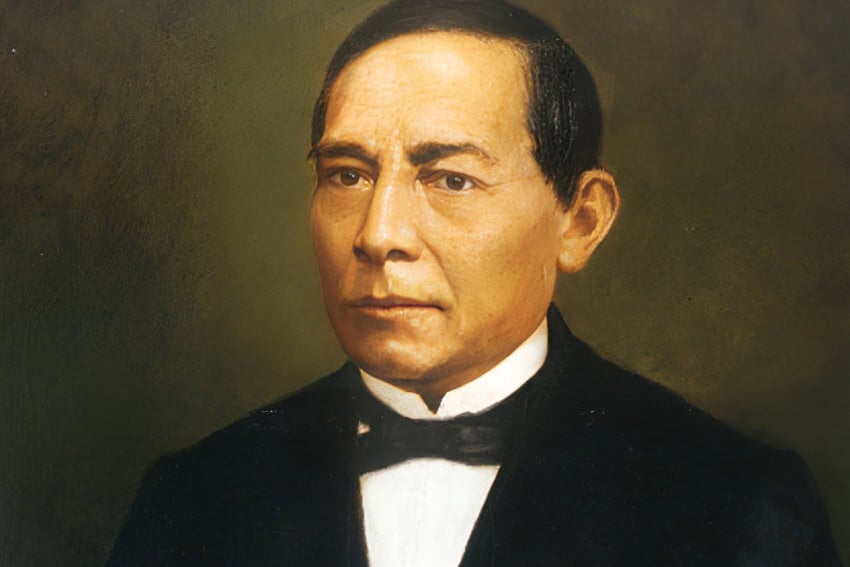
At the time, a civil war was raging across Mexico between the Liberals, under Benito Juárez, and the Conservatives. The Liberals wanted a President, reform and a reduction of the power of the Catholic church, all policies that appealed to Washington. Since the 1848 annexation of vast areas of northern Mexico, the policy of the European powers had been to block further U.S. expansion in the region. This inclined them towards the Conservatives, who had the additional appeal of being more open to the idea of establishing a monarchy.
To general surprise, a few weeks after Dubois’ arrival, the Liberal army entered Mexico City, bringing the war to an end. De Gabriac, who had sided with the Conservatives, was no longer welcome in Mexico, and Dubois, not having been there long enough to upset anybody, stayed on in a permanent role.
Mexico’s debt leads to war
Although the European powers would have preferred a Conservative government in Mexico, this was a domestic issue, and normally, they would not have interfered. However, Benito Juárez inherited a government that owed the European powers a considerable amount of money, both in loans and from silver shipments that had disappeared during the war. With a country in ruins and the Conservatives still capable of reigniting the war from the provinces, Mexico simply could not afford to pay its debts.
Then, starting in 1861, the U.S. became occupied by its own civil war, and the European governments, lobbied by Mexican Conservative exiles in Paris, sensed an opportunity. In October 1861, the three great European powers — France, Britain and Spain — agreed to take their money back by force, and by the following January, 10,000 European troops had occupied Veracruz. Admiral Jurien de La Gravière was in charge of the French contingent, and he would be guided by the senior French diplomat, the pro-Church, pro-Conservative Dubois.
With the arrival of the European powers in Veracruz, the Mexican authorities retreated from the coast, leaving the invaders to occupy the rundown port town, noted for fevers and vultures. Weeks passed in political stalemate, during which time Dubois once again demonstrated his ability to upset people. The arrival from Paris of the exiled Conservative leader, Juan Almonte, in Mexico was welcomed by the British publication The Spectator in the hope that it would reduce the negative influence of the French ambassador.
The Battle of Puebla
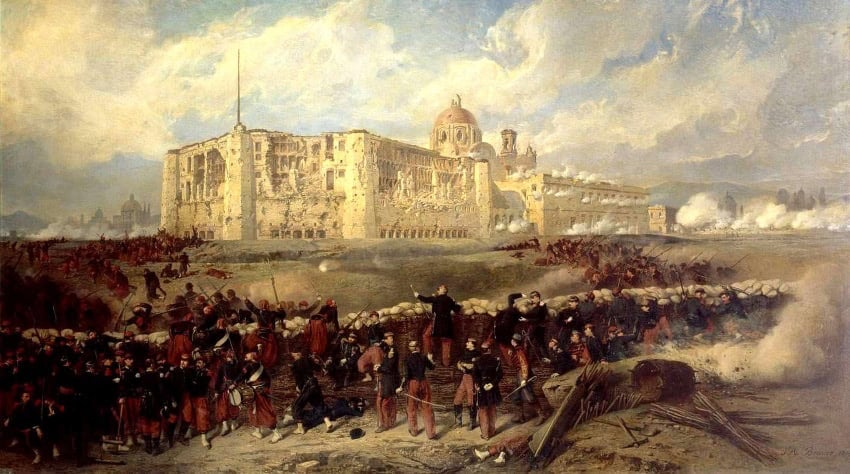
While Britain and Spain wanted to collect their money and depart, France had greater ambitions, and officials in Paris were probably not upset when Dubois informed them that talks had stalled and that he had cancelled any further negotiations with the Mexican government. The new plan was to have Almonte declared president of Mexico, so it was at this point that a French army of 7,000 men marched toward Mexico City. This was a ridiculously small force for such a task, but Dubois had assured the newly arrived General Charles de Lorencez that the Conservative faction was universally popular and that his soldiers would meet little resistance.
Instead, the French army arrived at Puebla to find the town manned and fortified. Having neither the time nor numbers for a siege, Lorencez, counting on a professional European army to sweep all before them, attempted to storm the gates. It was a disastrous decision, and his decimated force withdrew to Orizaba. This victory on May 5, 1862, is still celebrated by Mexican communities around the world.
It took four to six weeks for dispatches to reach France, where Napoleon III, presuming things were well in hand, was preparing to absorb Mexico into the French empire. A struggle now broke out between the defeated general and his political advisor to see who would shoulder the blame: Dubois informed Napoleon that Lorencez was “fearful, lazy, and sluggish” and implied he was drinking too much. Lorencez claimed that he had been misled by Dubois, who he said was “totally inept in his dealings.”
The French take Mexico City
It had been a military defeat, and so the general was doomed, while Dubois’ fate hung in the balance. But defeat at Puebla had heightened French resolve, and they were now preparing for a full-out war. This was the decision that would make Prince Maximilian, Emperor of Mexico, and eventually bring him in front of a firing squad. With war coming and nobody else on the ground to offer advice, Dubois not only survived the disaster at Puebla but emerged more influential than ever.
General Élie Frédéric Forey, a veteran of the Crimean War who had arrived to take over the French army in Mexico, was a cautious man, and he led a much larger force, some 28,000 men. He took Puebla by siege and, although it took a year, entered Mexico City in May 1863.
Conservatives came out in force to welcome the French, and the march into the city became a carnival of flowers, flags and bands. There was a service in the cathedral and a ball in the National Theatre where rich Conservatives mixed with their French saviors. Nobody seemed to worry that Benito Juárez had not been defeated but had simply withdrawn his forces beyond reach.
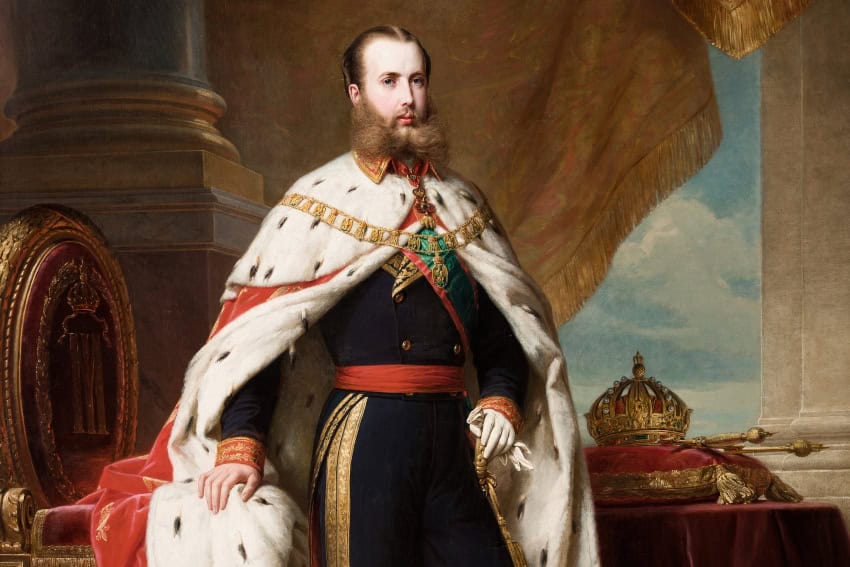
Dubois enjoys the fruits of a momentary victory
A new conservative-leaning government would have to be formed under French supervision. Almonte, Forey and Dubois all worked towards this, sometimes together, sometimes following their own ambitions, all three anxiously awaiting the letters approving their actions from Napoleon III, far away in France. As one of the men giving out recommendations, Dubois became very rich. The military victory also had to be acknowledged, and he was duly awarded the Grand Officer of the Legion of Honor.
Never a man to handle power well, and possibly drinking heavily, Dubois continued to upset people. One evening, he publicly accused the local chief of police of being little more than a thief and a highwayman.
In Mexico, Dubois was rich and powerful, and his marriage to María de Ortiz de la Borbolla linked him with the cream of Mexican society. However, he could not be in two places at once, and back in France, his many enemies were whispering into Napoleon’s ear: Why were Dubois and Forey partying in Mexico City and not pursuing the liberal rebels? Was Dubois not corrupt and too close to the Conservatives? How firm was French power in Mexico when it did not seem to stretch beyond the road from the capital to Veracruz?
Dubois is recalled to France
As Mexico settled into whatever uncertain future it faced, first General Forey, and then Dubois, were recalled. The diplomat was in no rush to leave, but in December 1863, he obeyed the increasingly angry demands from the ministry and sailed for France with his Mexican family.
There were to be no further postings, and he contented himself with being mayor of the commune, or municipality, of Saint-Martin-du-Vieux-Bellême in northern France. It was here that he died in 1888 at the age of 79, with Mexico’s ill-fated, French-appointed Emperor Maximilian executed in 1867 and France’s empire in Mexico a long-abandoned dream.
Bob Pateman is a Mexico-based historian, librarian and a life-term hasher. He is editor of On On Magazine, the international history magazine of hashing.
Source: Mexico News Daily