By the time the last Volkswagen Beetle in the world rolled off the assembly line in Puebla in 2003, the “Vocho,” as it is still fondly called, had endeared itself to just about everyone in Mexico.
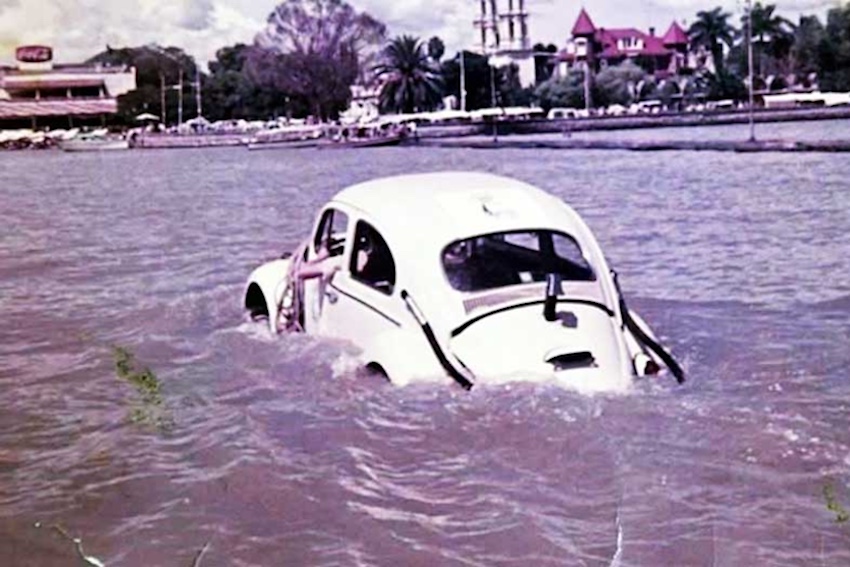
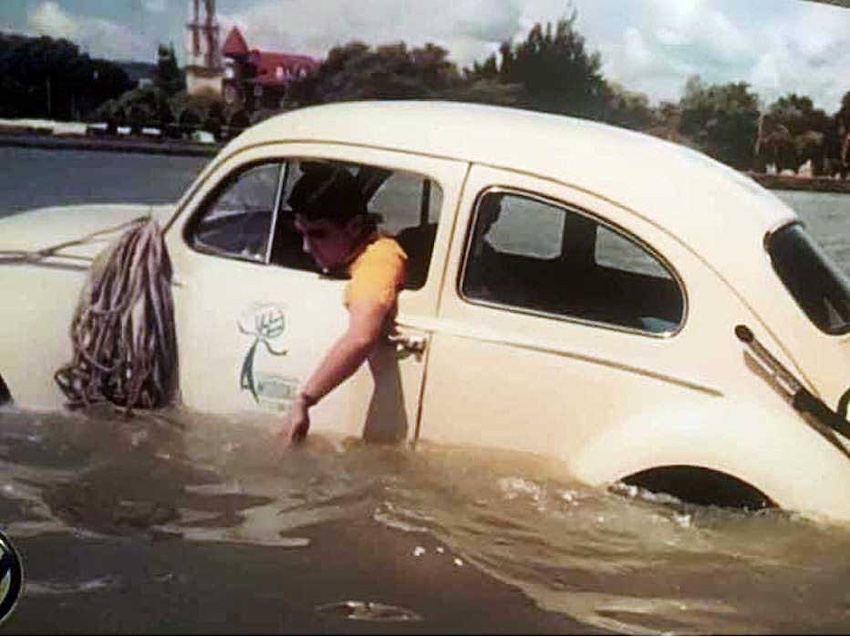
One of the factors that brought the curvy sedan into the public eye was the unforgettable day a little white Vocho — equipped with a 30-centimeter propeller — chugged across Chapala, Mexico’s biggest lake.
That crossing took place on September 8, 1968. The story of the event was widely published, but details were scarce, and many papers embellished their reports.
In search of the real story
To get the true and full story, I sat down with Jorge Viera, president of the Volkswagen Classic Club in Guadalajara, who spent years looking for the mechanics who made the car amphibious and piloted it across the lake.

“I knew eight of the 14 people involved,” Viera told me, “and one of them introduced me to the man who organized the whole thing: Alois Poppenreiter. He was an Austrian-Hungarian engineer brought to Guadalajara by Volkswagen Americas to act as Service Manager.
“It was in 1968 that the idea of floating the little car occurred to Poppenreiter. Volkswagen had announced that their sedan was the most hermetic car to be found and had made ads saying it floated, but it wasn’t really true. Poppenreiter, however, decided he was going to do it; he was going to make a Volkswagen float, and he was going to make it float right across Lake Chapala!”
Poppenreiter got together with several equally enthusiastic Mexican mechanics at Volkswagen Americas, and the owners of the dealership provided them with a used 1968 sedan. For the next six months the team worked on this project during their free time. They were never paid anything for this and always made it clear they had done it for fun.
They started out by putting the Vocho through their car wash to see just how watertight it was.
“Then they began work on sealing it up,” says Viera. “People say they use silicon, but it didn’t exist in those days! Actually, they used a product called Apcoseal, as well as putty, cork, and even egg whites: nothing fancy!
Beneath black waters
“Next, they went to a nearby park called Avila Camacho, where there was a dam. Well, a certain amount of what we call ‘aguas negras’ (raw sewage) flowed into that dam, but that didn’t hold back the team. They built a ramp, drove the Vocho into it… and it sank! They had to pull it out with a tractor and ropes.”
Years later, Marcelo de Loza, one of the Mexican mechanics, recalled the event. “The water in that dam was dirty and smelled bad. We went back to the agency and washed both the car and ourselves. I ended up stinking for three days,”
By trial and error, the project advanced. The car’s 1200 engine had been ruined by water leaking into it and was replaced by a 1500. Adjustments were made to keep the oil in and the water out. A modified worm gear had to be made on a lathe.
Water snakes and lilies
“Next,” continues Viera, “they tested the car at the Ajijic Yacht Club and Lake Cajititlán where they ran into problems from water snakes and ‘lirios,’ water hyacinths that carpeted many local lakes and lagoons in those days.”
By now, the Vocho had a removable 30-cm bronze propeller on the back, industrial tubing extending its exhaust pipes above water level, and a snorkel on its carburetor.
At last, they made their final tests in Lake Chapala.
The lake crossing was to take place on September 8 and for the event they hired two speedboats to accompany them in case of trouble.
It’s important to note that the doors of the Vocho were sealed and couldn’t be opened even in an emergency. If the car began to sink, they would have to exit via the windows.
The pilot of the amphibious vehicle was Alois Poppenreiter himself and the copilot was the man in charge of the electrical system, Marcelo de Loza, who, however, was specifically chosen for co-pilot “as he was an excellent swimmer.” De Loza operated the car’s two bilge pumps. The public didn’t know about these because the water was being pumped out of the car through the glove compartment.
Finally came the day of the crossing. The would-be mariners attached a 30-meter-long agave-fiber rope to the bumper, in case the car went to the bottom. This was coiled and hanging on the outside mirror on the driver’s side. They informed the newspapers, and lots of people showed up.
The plan was to launch the boat at 12:00 noon from San Luis Soyatlan at the southwest corner of the lake. They expected to reach Ajijic at 2:00 p.m. and Chapala at 3:00.
“However, says Viera, “there they were on the 8th, ready to launch, but the two speed boats were nowhere to be seen. The reason was the waves. They were so high that no boats of any kind were allowed on the lake. It was too dangerous.”
“Well, after a while, the waves calmed down and they immediately launched the Vochito, accompanied by an ordinary rowboat. It was only halfway through the event that one of those speed boats arrived. There were stories that a scuba diver accompanied them, but these were just rumors.”
Choppy waters
Chapala or bust
“We left San Luis Soyatlán at about 12:15,” recalled de Loza in a TV Azteca interview, “and, sure enough, after a little while the motor died…but, we managed to get it going again and carried on, reaching Ajijic at about 4:00 p.m., but then we had to keep going in the water to reach Chapala. That took us another two hours.”
When they arrived, a euphoric crowd of locals and tourists welcomed the Vochito at the pier — and then began the fiesta!
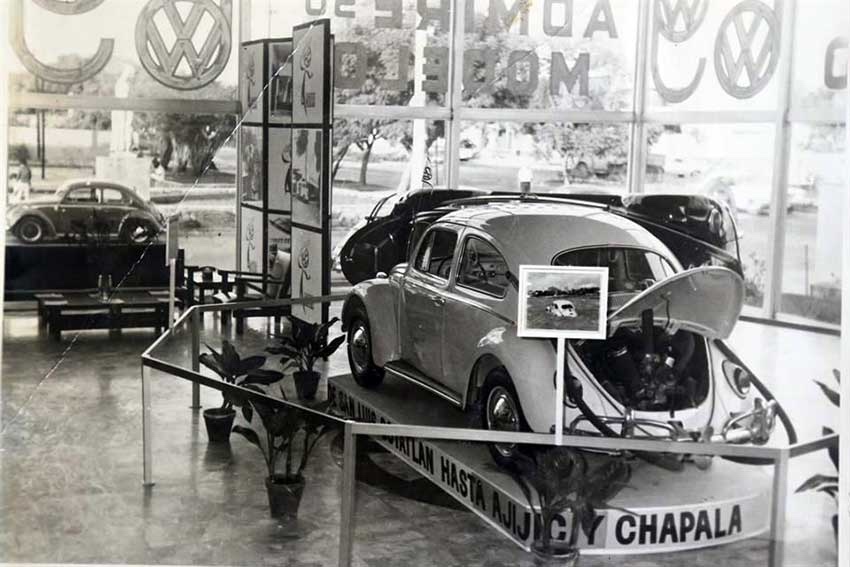
The car was put on exhibit in Volkswagen Americas for a while and — restored for normal operation — made its final public appearance at Jalisco Stadium during a World Cup soccer game in 1970. It was driven to the middle of the pitch where, to the crowd’s delight, out of it emerged all eleven members of Mexico’s team, who had been crammed inside. The car was then sold and lost track of, but the Vocho that crossed the lake will never be forgotten.
John Pint has lived near Guadalajara, Jalisco, for more than 30 years and is the author of “A Guide to West Mexico’s Guachimontones and Surrounding Area” and co-author of “Outdoors in Western Mexico.” More of his writing can be found on his website.
Source: Mexico News Daily