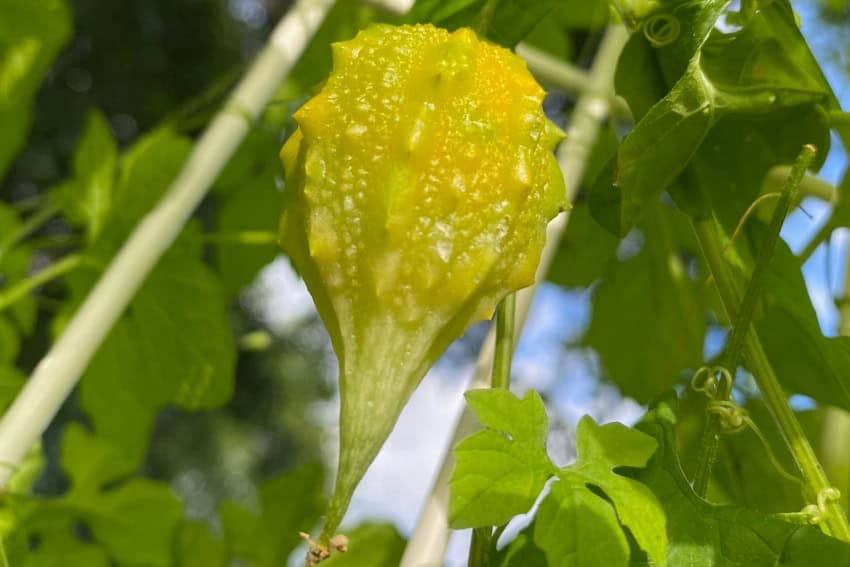
I’m delighted daily by the biodiversity of Mexico. Most of all, by the wealth of its edible wild plants. Lately I’ve been obsessed with its tiniest treasures. The world’s smallest fruit and vegetables.
Like the world’s smallest passionfruit, which is less than the size of my thumbnail. Or, the world’s smallest cucumbers, which are about half the length of my pinkie finger, are crunchy and delicious. Now I pickle them when I find a big patch. Or pop them in my morning smoothie after a walk when I only find a handful.
Speaking of pickling, I also stumbled across the world’s smallest bitter melon, which is also quite tasty pickled. Or sliced in stir-fries.
Now, can you see why I’m obsessed with these delightful tiny treasures? No? Then let me show you how adorable they are, and I’m sure you’ll get it.




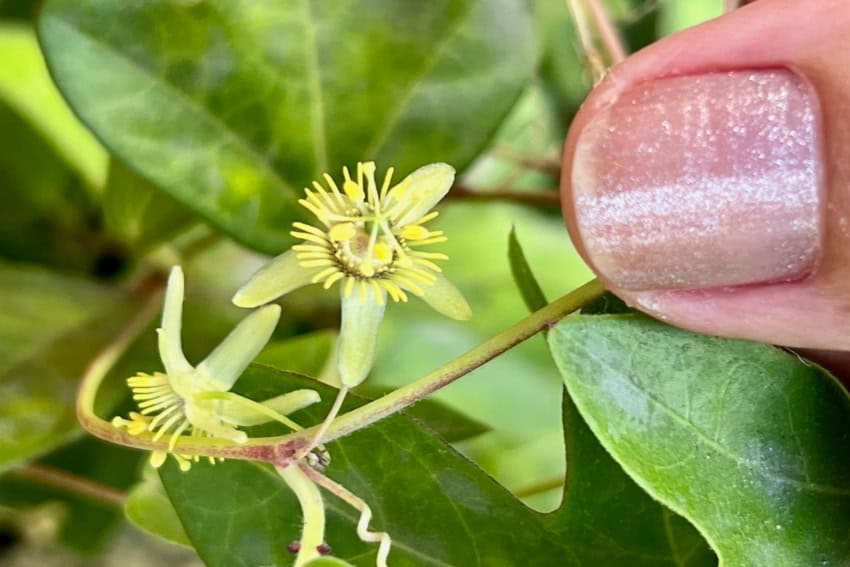
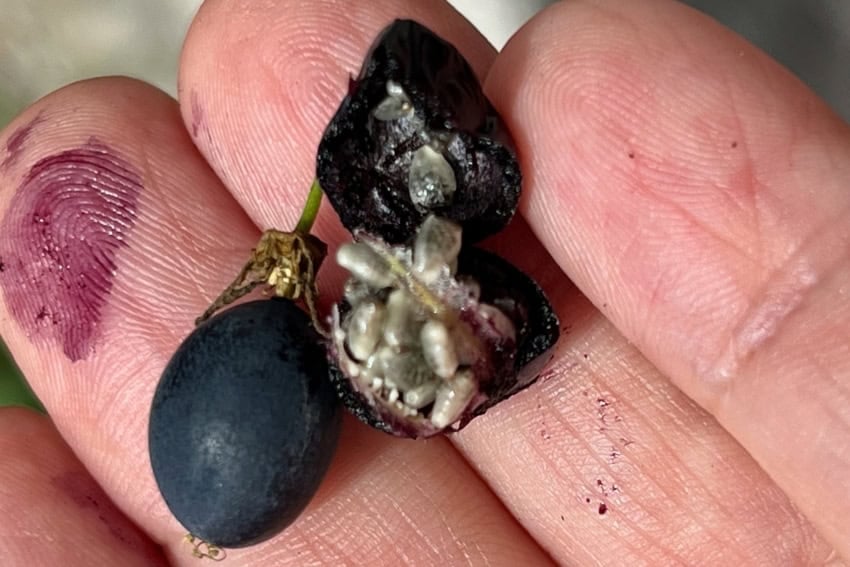
My favorite, the world’s smallest passionfruit
Don’t laugh, but I actually squealed in delight when I found these walking back from swimming one morning. Causing other walkers to giggle and stop to see what all the fuss was about. Soon, there was a small gathering admiring these tiny treasures sprouting from the sidewalk!
It’s the world’s smallest passionflower — Passiflora pallida. With adorable flowers the size of my thumbnail, it’s not just me who loves them. They’ve caused squeals of delight worldwide. They are now adored by nature lovers in the U.S., France, England, Australia, Greece, Italy, Germany, plus Singapore and Japan, after I posted them in a Botanical Art School I’m a member of. Everyone agrees, these are the most adorable edible treasures I’ve found so far.
Funnily enough, they didn’t really taste like anything. I’ve eaten a few now, and they are so small I couldn’t get a decent mouthful to tell if they are sweet, sour, bland or delicious! But don’t worry! I’ve found several other wild passionfruit here that are slightly larger and they are delicious.
So, do you want to know which tiny treasure is the most delicious?
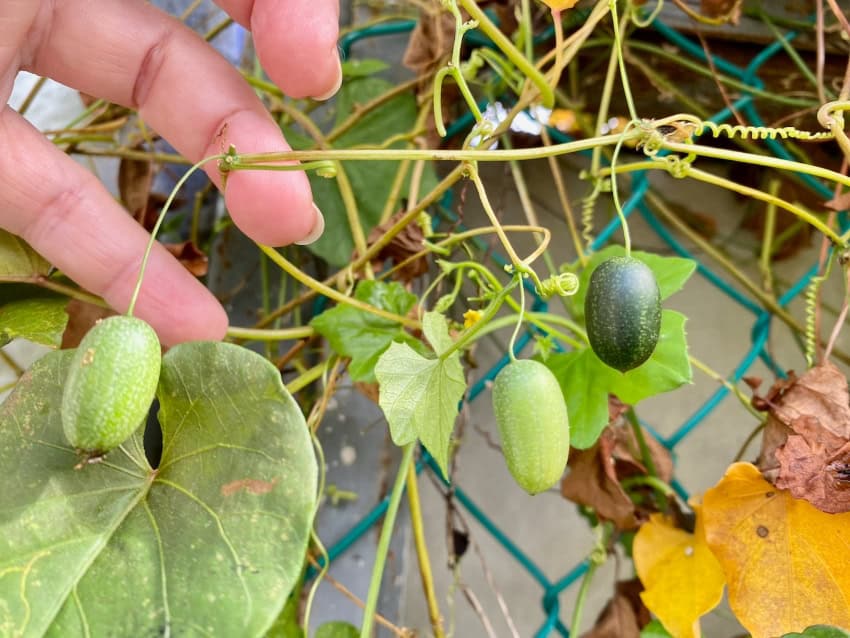
World’s smallest cucumber, or mouse melon if you prefer
This delicious delight is not only cute to look at, but has some pretty cute common names, too. My favorite’s being melonette and mouse melon. Can’t you just see a little mouse holding one and happily munching away? I can, and it’s delightful.
Usually called the creeping cucumber or Guadalupe cucumber, you guessed it, it’s native to Mexico. It has been enjoyed since Pre-Columbian times. Both as a food and in traditional medicine, but I usually pop it in my morning smoothie.
What does it taste like? Well, exactly like one of its larger store-bought cucumber cousins. Crisp, refreshing and cucumbery.
Sometimes they don’t even make it home! Happily eaten on walks if I only find a few, and when I find a lot, I make mini pickles — I especially love them with some cheese, they make a great snack!
Note: only eat the light green ones. Dark-skinned ones will give you an upset tummy or the squirts, and no one wants that!
But they aren’t the only tiny edible treasure I pickle. Want to know my favorite?
World’s smallest bitter melon
This delightful knobbly little fruit is my favorite for pickling. That sweet, sour, tangy flavor makes my taste buds sing. But then again, I’ve eaten bitter melon for years. In the markets throughout Asia and back home in northern Australia, you’ll find them readily available, so they aren’t new to me. Whereas my American friend said, “What the hell is that?” when I stopped to pick some.
We were walking and I suddenly stopped. My heart almost skipped a beat passing a fence. This tiny thing that looked like a bitter melon was at eye level. Have you ever had those thoughts, “was that a …?” when you see something somewhere you didn’t expect to?
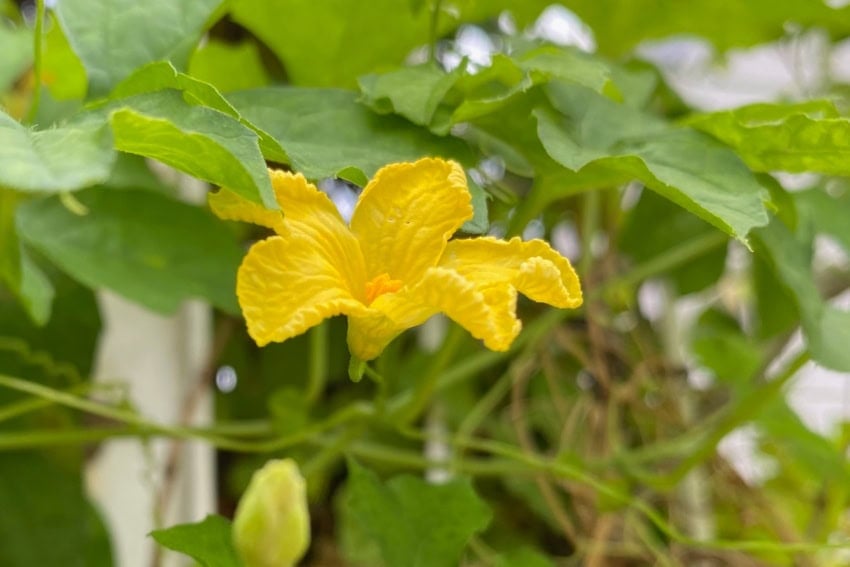
I did. Thinking to myself, “Was that a baby bitter melon?” I stopped, turned around and went back. Seeing the lovely flowers, whose cheery sunflower yellow always delights me, yes, it was. A small wild version of the large 20-30 centimeter bitter melons I used to get at the market.
What a wonderful discovery! But to be sure, I picked a few and took them home to identify them before going back to collect more.
Lastly, words of advice for wild foods
As all foragers and fans of wild food know, always double-check and identify things before you eat them. I thought this was common sense, but then I met a woman who just picks, eats, and thinks everything will be fine. I do NOT recommend this.
Always identify a plant first before consuming, ideally through a trusted and expert site like PlantNet. It’s free, and there’s a great app if you want to identify things while wandering the wilds. It’s the one I use, and it hasn’t let me down yet.
So, if you’re like me and want to head out to explore the natural world around you, get PlantNet. Then enjoy finding fun edible tiny treasures, and happy foraging!
I hope to see you out and about exploring Mexico’s biodiversity as well. Because it’s amazing what you’ll find when you take a moment to look. And a lot of times, it’s delicious!
Mexico Correspondent for International Living, Bel is an experienced writer, author, photographer and videographer with 500+ articles published both in print and across digital platforms. Living in the Mexican Caribbean for over 7 years now, she’s in love with Mexico and has no plans to go anywhere anytime soon.
Source: Mexico News Daily