Fresh off successful negotiations that delayed additional U.S. tariffs for at least 90 days, the Sheinbaum administration is now focused on achieving a bilateral trade scenario that reduces the threat of new tariffs.
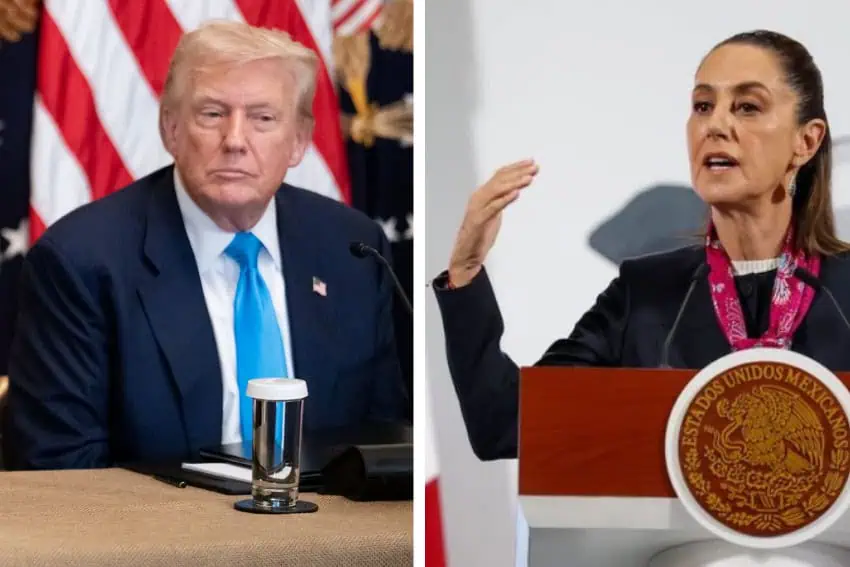
After a 40-minute phone call with President Claudia Sheinbaum, U.S. President Donald Trump agreed to delay the 30% tariff he had threatened to impose on Mexico starting Friday on products not covered by the USMCA free-trade agreement. Sheinbaum said the delay was the “best possible agreement.”
How Sheinbaum closed the deal on this week’s tariff reprieve: Thursday’s mañanera recapped



As the two powers try to establish a common solution to trade concerns, one issue at the top of the list is Mexico’s growing bilateral trade surplus.
“We are working on our trade policy to become less dependent on countries with which we don’t have trade agreements and try to buy a little more from the United States without harming our industry,” Mexico’s Deputy Minister of Industry and Commerce at the Economy Ministry Luis Rosendo Gutiérrez told the newspaper El Economista.
Over the coming months, the Mexican government aims to identify more U.S. product source markets for companies established in Mexico and encourage firms to “buy American” to reduce the trade surplus.
“We are working to identify, by tariff code, what we import from Asia or from countries with which we don’t have a trade agreement, in order to bring in some products … from the United States,” said Rosendo.
“If not only the government but also private companies stop or reduce purchasing from countries with which we do not have a trade agreement, and purchases of U.S. products are strengthened, without generating inflation, it is clearly a way to reduce the U.S. trade deficit,” Sheinbaum said during her daily press conference on July 25.
Between January and May, Mexico’s trade surplus with the United States rose by 16.6% to a record high of $79.442 billion, marking five consecutive years of record-breaking surpluses. This was far higher than Canada’s trade surplus of $27.381 billion during this period.
Almost 85% of Mexican exports fall under the USMCA, while a 25% tariff is imposed on exports outside of the agreement, with tariff discounts on automotive exports. This puts Mexico in a more favorable position than Canada, which now has 35% tariffs on non-USMCA goods.
Rosendo praised Sheinbaum’s “cool-headed” negotiation strategy for encouraging Trump to delay the proposed tariffs.
Por instrucciones de la Presidenta @Claudiashein avanzamos en la mesa de negociación comercial bilateral con 🇺🇸@USTradeRep instalada el viernes pasado. Con la participación de @Hacienda_Mexico @SRE_mx y de @SE_mx @m_ebrard pic.twitter.com/zrvaYqKqz8
— Luis Rosendo Gutiérrez (@LuisRosendo_) July 17, 2025
“It seems to me that what was seen with Canada’s differentiated treatment of Mexico is a reflection of the strategy each country has adopted,” said Rosendo. “From the beginning, Canada decided to take a somewhat more antagonistic role with the United States.”
In a letter in July, Trump told Sheinbaum of his intention to impose a 30% tariff on imports from Mexico because, in his view, Mexico wasn’t doing enough to combat the trafficking of fentanyl to the United States.
However, Mexico has made significant progress in combating the fentanyl crisis in recent months, having seized large quantities of the synthetic opioid and dismantled over 1,000 clandestine labs where that drug and others were made.
Mexico’s Foreign Affairs Minister Juan Ramón de la Fuente said that following the most recent call with Trump, Sheinbaum instructed the negotiating team to maintain and strengthen channels of communication with the U.S. government as it restores stability to its North American trade relations.
With reports from El Economista, El Financiero, El Universal and The New York Times
Source: Mexico News Daily