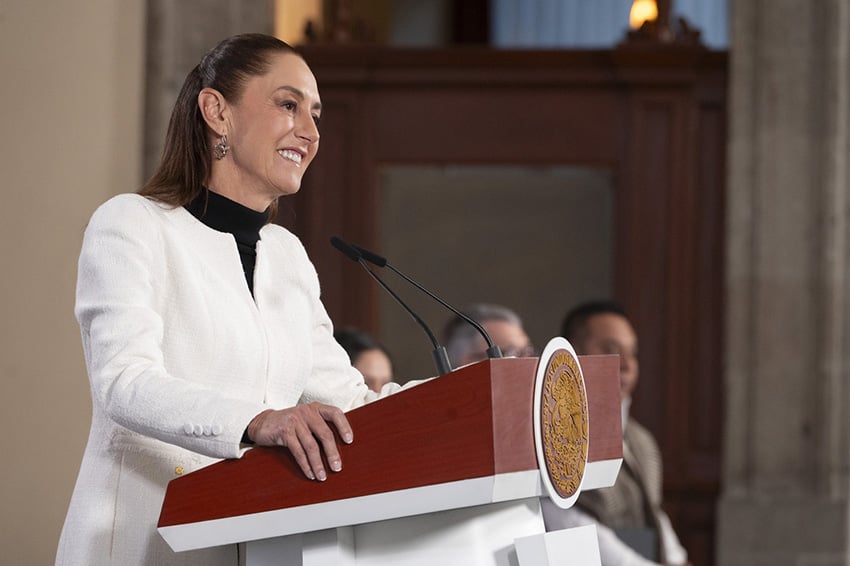
Mexico’s final week of 2025 began with devastating loss as a train derailment claimed 13 lives Sunday morning, prompting President Claudia Sheinbaum to travel to Oaxaca Monday afternoon, immediately after her mañanera, to meet with victims’ families.
The tragedy cast a somber shadow over the year’s end, even as Sheinbaum delivered her New Year’s message emphasizing unity and progress.
Didn’t have time to read this week’s top stories? Here’s what you missed.
Fatal interoceanic train derailment
The week’s most tragic story unfolded Sunday morning when the Interoceanic Train derailed near Nizanda, Oaxaca, approximately 85 kilometers north of its destination in the port city of Salina Cruz. The accident killed at least 13 people and injured more than 100 of the 250 passengers and crew aboard the two-locomotive, four-carriage train.

The derailment occurred on a curved section of track at the edge of a ravine. While the two locomotives avoided falling down the embankment, the first passenger car detached and slid approximately 6.5 meters down the slope. The second car was left partially suspended in mid-air, while the third and fourth cars came to rest crosswise over the tracks but remained undamaged.
President Claudia Sheinbaum immediately dispatched Navy Minister Admiral Raymundo Morales to the scene and mobilized medical teams. On Wednesday, the president announced plans to seek international certification to improve railway safety, stating that once investigators submit their report, a certifying body should recommend improvements to ensure the track and locomotives are in proper working order.
The accident has increased pressure on Sheinbaum over the safety of recent government megaprojects. Investigative journalist Alejandra Crail reported that Mexico’s federal auditing agency had cited concerns during the train’s construction phase about steep slopes, curves and undulations in the mountainous terrain, as well as questions about contractors’ technical capacity. This marks the third train accident in Mexico this year, following one derailment on the Maya Train in Yucatán and another in Quintana Roo, though neither resulted in serious injuries.
Market performance defies economic headwinds
Despite ongoing struggles in Mexico’s macroeconomy, the nation’s financial markets closed 2025 with remarkable strength.
Mexican stocks outperformed Wall Street, with the iShares Mexico ETF rising over 50% — its highest increase since 1999, significantly exceeding major U.S. benchmarks. Mining and materials companies particularly benefited, with Industrias Peñoles surging more than 260% and Gentera climbing over 100%.
The peso’s performance proved equally impressive. Mexico’s currency strengthened nearly 14% against the U.S. dollar in 2025, marking its best year since before 1994, when the country established its current free-floating exchange rate regime.
2025 was the modern Mexican peso’s best year ever
The peso closed around 18 per dollar and ranked as the sixth-best-performing major currency globally. The Bank of Mexico’s interest rate cuts — reducing rates by 300 basis points to 7% — helped inject cash into the economy while maintaining investor confidence, alongside structural factors like nearshoring and export resilience.
Mexico’s tourism engine full steam ahead into 2026
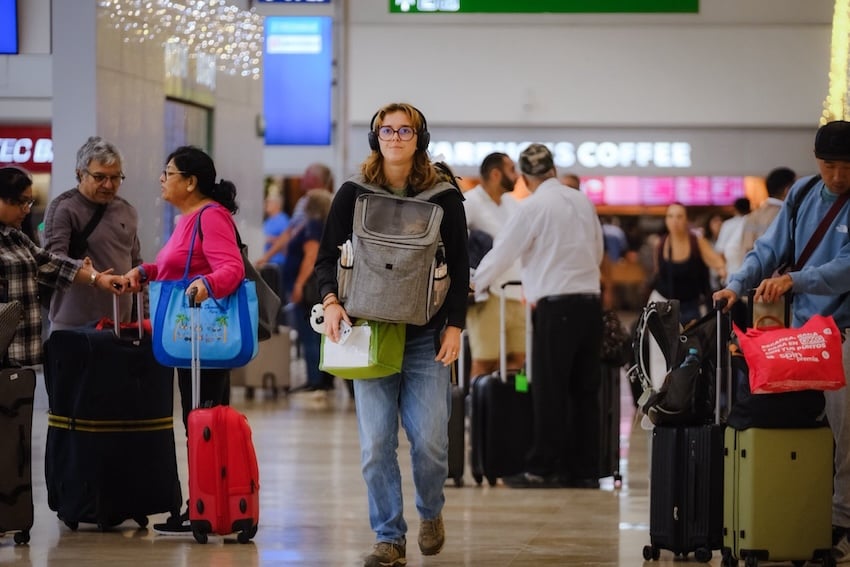
Mexico’s tourism industry demonstrated impressive momentum as the year closed, with the country expecting nearly 5 million tourists during the 2025-2026 year-end holidays between Dec. 20 and Jan. 11. This represents a 5% increase over the previous season, with national hotel occupancy rates reaching 56.6% and some destinations exceeding 80%. Tourism Minister Josefina Rodríguez Zamora emphasized that the sector’s strong performance underscores tourism’s role as a vital engine for Mexican families’ well-being.
Felipe Ángeles International Airport moved more than 7 million passengers in 2025, a 12% jump over 2024, bringing the Mexico City area’s second international airport to 17 million passengers served since operations began in March 2022. AIFA’s Master Development Plan projects serving 9 million passengers by 2026, with the FIFA World Cup expected to drive significant additional traffic.
These are all the upgrades coming to Mexico City ahead of the World Cup
The airport faced challenges during the year, including cancellation of 11 international routes by the U.S. Department of Transportation, eliminating approximately 84,000 passengers. President Sheinbaum has committed to recovering these routes in 2026. The long-awaited Lechería-AIFA train connection remains on schedule to open by late March, just in time for Holy Week travel.
Meanwhile, Cancún will welcome 17 new international flight routes for 2026, connecting Mexico’s Caribbean coast to 11 U.S. cities, five Canadian cities and Dublin, Ireland — marking the first non-stop flight between Cancún and Ireland. Additional domestic connectivity came through Viva Aerobus’s new Saltillo-Cancún route launching in March.
New trade barriers take effect
The new year brought sweeping tariff increases on imports from China and other countries without free trade agreements with Mexico. The measures, effective Jan. 1, affect 1,463 product categories across sectors, including automotive, textiles, steel, plastics and electronics. New duties range from 5% to 50%, with the highest rates on vehicles from China and certain Asian nations.
The policy aims to safeguard approximately 350,000 jobs and advance “sovereign, sustainable and inclusive reindustrialization” under Plan México, President Sheinbaum’s strategy targeting a 15% increase in domestic content and 1.5 million new jobs. The government estimates the tariffs will generate 70 billion pesos in annual revenue. Chinese cars, including electric vehicles from manufacturers like BYD, previously faced 20% duties; the new 50% tariff has been welcomed by Mexican auto industry leaders. Critics warn the measures could increase consumer prices and hurt small businesses relying on imported inputs.
Earthquake rocks capital on second day of the year
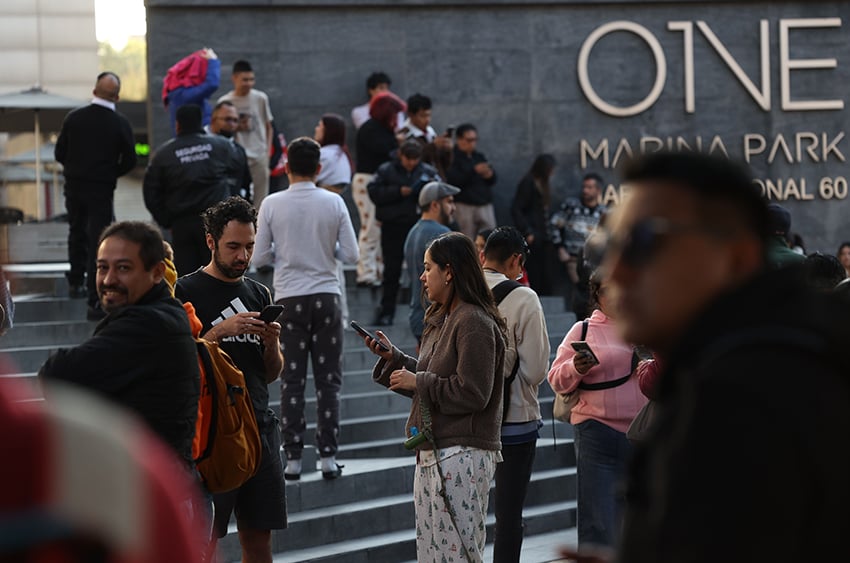
Mexico City residents barely had time to ring in the new year before a magnitude 6.5 earthquake struck Friday morning at 7:58 a.m., triggering the capital’s seismic alarm and sending people into the streets. The epicenter was located 15 kilometers south of San Marcos, Guerrero, at a depth of 5 kilometers, and was especially strong in Acapulco, where residents reported intense shaking lasting 30 seconds.
As of midday Friday, authorities confirmed one death — a man who fell while rushing down stairs — with 12 people injured. Mexico City Mayor Clara Brugada reported five downed poles and four fallen trees, with power outages affecting multiple boroughs.
A small electrical substation fire was quickly contained with no injuries. The National Seismological Service recorded 273 aftershocks by 10 a.m., with the largest at magnitude 4.2. Both President Sheinbaum and Mayor Brugada confirmed no serious structural damage in the capital, while Benito Juárez International Airport (MEX) reported normal operations.
Looking ahead
As Mexico moves into 2026, the nation faces great opportunities and tests. The USMCA review process begins this month, with formal discussions expected to dominate trade policy headlines through mid-year. The new tariffs on Chinese imports will reshape supply chains and potentially affect consumer prices, while their long-term impact on domestic manufacturing and job creation remains to be seen.
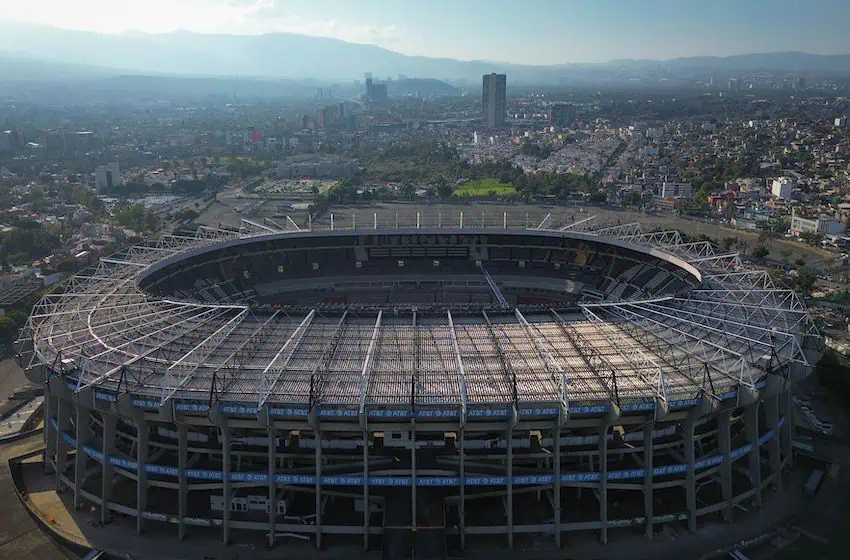
Tourism’s continued momentum — bolstered by new flight routes and strong year-end numbers — positions the sector as a key economic driver, particularly with the FIFA World Cup on the horizon in June.
Whether the peso can maintain its remarkable performance and stocks continue their rally will depend on how successfully Mexico navigates these trade negotiations and implements its economic development strategy. The investigation into the Interoceanic Train derailment will also test the government’s commitment to accountability and infrastructure safety as it pushes forward with ambitious transportation projects.
This story contains summaries of original Mexico News Daily articles. The summaries were generated by Claude, then revised and fact-checked by a Mexico News Daily staff editor.
Source: Mexico News Daily