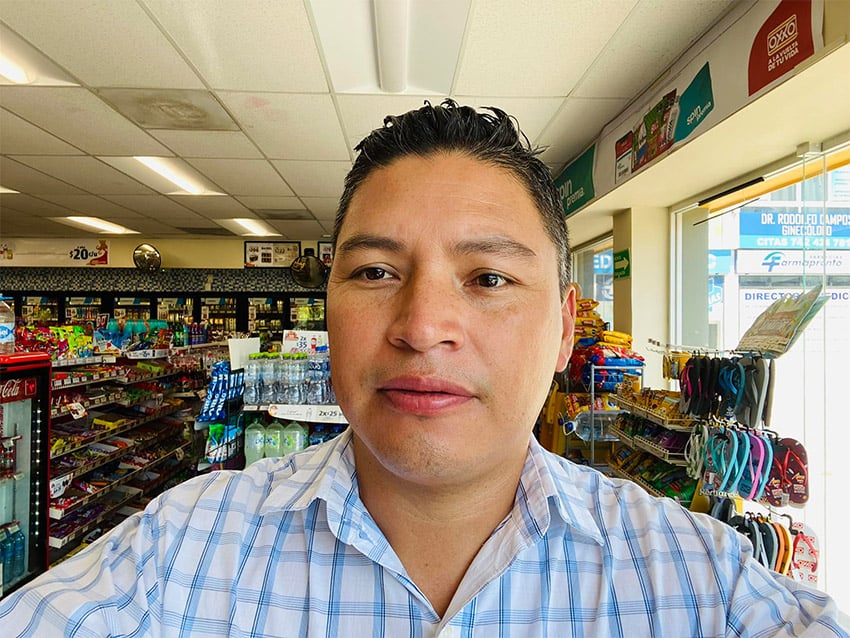
A young man aiming to become the next mayor of a municipality in the southern state of Guerrero was shot dead on Sunday.
It wasn’t an isolated case: Alfredo González Díaz is one of more than a dozen political aspirants who have been murdered during the electoral period leading up to Mexico’s largest ever elections on June 2.
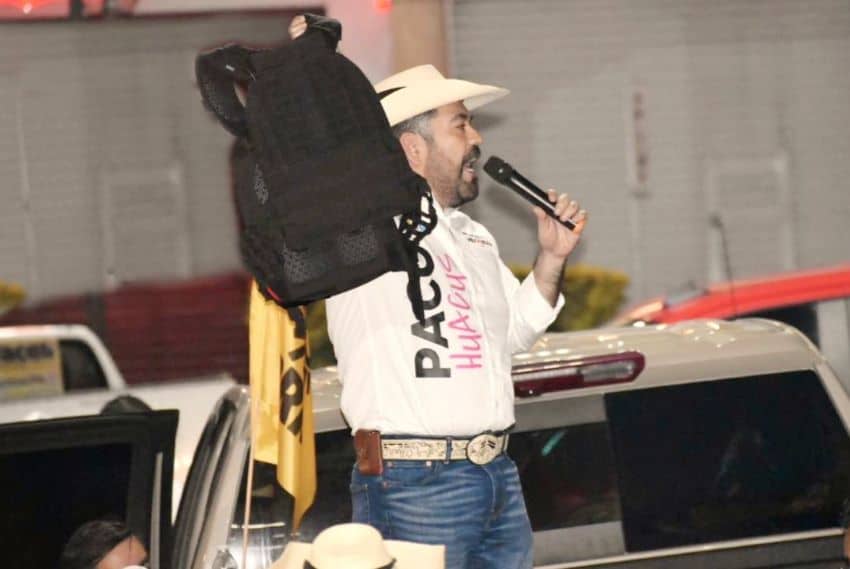
González, who would have represented the Labor Party in the mayoral election in Atoyac de Álvarez, was the third political murder victim in seven days after rival candidates for mayor in the Michoacán municipality of Maravatío were slain within hours of each other last Monday. Another mayoral hopeful in Maravatío was murdered last November.
Aspiring to political office in Mexico — especially at a municipal level in certain states — is indeed a risky business.


Candidates — or “pre-candidates” as political hopefuls are known before the commencement of the official campaign period or before they have won endorsement from a political party — have been killed in around one-third of Mexico’s 32 federal entities during the 2023-24 electoral period, which began last September.
In a report published early last month, the non-governmental organization Laboratorio Electoral said that 16 political aspirants had been killed during the 2023-24 electoral period, and that a total of 33 people had been murdered in acts of violence “directly related to the electoral process.”
Those figures have already increased, and with almost three months to go until election day, they will almost certainly continue to do so.
Political violence in Mexico is most common at the municipal level, at which candidates and officials are usually more accessible to the public and have small or non-existent security details. That makes the thousands of people seeking to win an elected municipal position especially vulnerable to violence, as does the fact that influence over governments at that level is highly coveted by organized crime groups and seen as much more obtainable than holding sway at a state or federal level.
“Local power is extremely important to organized crime,” Manuel Pérez Aguirre, a political scientist, told the Associated Press.
“That’s why they look to establish control at the municipal level,” said Pérez, an academic at the College of Mexico who studies electoral violence.
Perhaps in some municipalities — there are close to 2,500 in Mexico — officials are able to be corrupted more easily than their state and federal counterparts.
According to Itzel Soto, a data analyst with Data Cívica and the coordinator of the organization’s electoral violence project, the municipal level is “where corruption agreements” are most common between officials and organized crime.
When a change in municipal power is approaching, “violence is unleashed because those agreements are in dispute,” she told Radio Fórmula.
If a crime group can get its preferred mayoral candidate elected — perhaps by murdering a rival candidate or coercing voters — its operations at a local level could be made much easier given that mayors have authority over municipal police forces, many of which have been have been shown to be corrupt.
“What [crime groups] are looking for is to continue controlling an area or [to begin] to control it by making an impunity pact with a future leader or by keeping a [current] leader with whom they already feel comfortable … in power,” Gerardo Rodríguez, a political science professor at the University of the Americas in Puebla, told the El Economista newspaper.
While data shows that candidates at the municipal level are most likely to be victims of murder and other crimes during the electoral period, the federal government doesn’t provide any specific protection to them, as it does for some hopefuls at the state and federal level.
President Andrés Manuel López Obrador has downplayed the extent of Mexico’s electoral violence problem, saying last month that there was no risk to the integrity of the upcoming elections and that the country was “at peace.”
Guillermo Valencia, president of the Institutional Revolutionary Party in Michoacán, has a very different view, telling AP that in his home state — where several candidates have been killed — and across Mexico “democracy is threatened” by electoral violence, which has affected all the nation’s political parties.
“Four candidates have already resigned on me and I’m struggling to find candidates” for other municipal elections, he told AP.
Soto, the data analyst, noted that the levels of such violence are not the same “in the entire Mexican republic,” pointing out that certain municipalities in states such as Veracruz, Guerrero, Guanajuato, Zacatecas and Michoacán are suffering the most.
The United Nations weighs in
In an address to the United Nations Human Rights Council in Geneva, Switzerland, on Monday, the UN High Commissioner for Human Rights, Volker Türk, mentioned that “in Latin America and the Caribbean, the prevalence and violence of gangs and organized crime have severe impact on the lives and rights of millions of people, including in Ecuador, Haiti, Honduras and Mexico.”

He also noted that “in Mexico, several electoral processes will coincide in June, resulting in the planned election of more than 20,000 public officers, including the president, all members of the federal parliament, and a wide range of state and local representatives and authorities.”
“This immense exercise of political and civil rights must be safeguarded against violence,” added Türk, tacitly acknowledging the prevailing situation and seemingly issuing a directive to — and perhaps even a veiled attack on — the federal government.
López Obrador responded to the remark at his morning press conference.
“With all respect, the high commissioner is very biased, he’s against us and colludes with those who want to show that Mexico is a very violent country,” he told reporters shortly after describing the murder of the mayoral aspirant in Atoyac as “very regrettable.”
With reports from Radio Formula, El Economista, El País, AP and El Universal
Source: Mexico News Daily