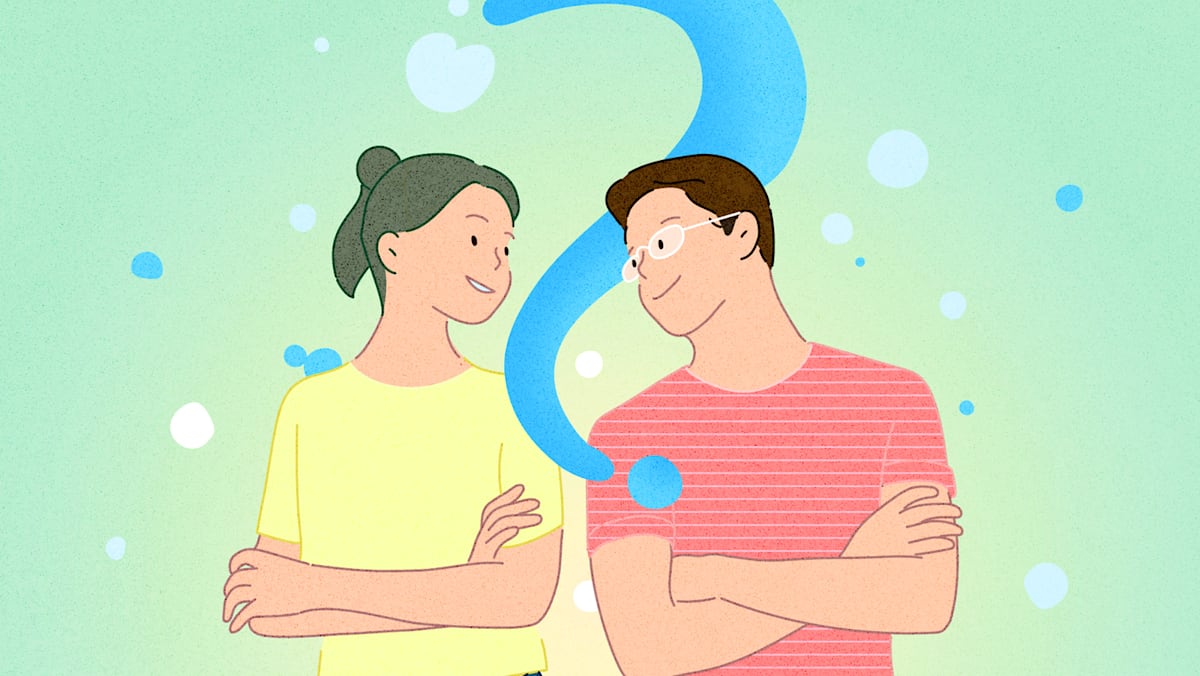
And what the CGFR suggests is that despite living, studying and working alongside one another, many of us still drift into gendered bubbles.
That divide doesn’t just affect who we spend time with. It also limits our emotional imagination.
When we rarely see close, platonic cross-gender friendships modelled around us, we struggle to picture them as normal.
A HISTORY OF DISTANCE
These attitudes didn’t come out of nowhere. For much of Singapore’s past, men and women simply didn’t spend meaningful time together outside family.



In her 1975 book Women in Modern Singapore, Professor Aline Wong, who would later become one of Singapore’s first female political officeholders, wrote that “whether born as a Chinese, an Indian or a Malay, a woman is subjected to socio-cultural and religious pressures to conform to the roles of wife and mother and to lead a secluded life”.
That segregation shaped how genders interacted. Single-sex schools were the norm until mass education expanded in the 1960s.
In the workforce, women accounted for just one-third or 33.85 per cent of the labour force in 1973 – often in manufacturing or service roles – while men held professional and technical posts.
Friendships are often formed from shared experiences and proximity. When daily life kept men and women apart at school, at work and in social spaces, there were fewer chances for those relationships to even begin.
And even though our lives look nothing like they did then, some of those tendencies still linger in the way we relate today.
WHY THESE FRIENDSHIPS MATTER MORE THAN WE THINK
But after some research, I also found that more cross-gender friendships can benefit society as a whole.
When more men and women form meaningful friendships, it becomes harder to reduce one another to roles or stereotypes. We become less likely to see women as emotional caregivers by default, or men as emotionally unavailable by nature.
In my experience, that holds because having close friendships with women has changed how I see things. I spent most of my school years in all-boys environments, and without realising it, I absorbed a way of seeing women as either fantasy objects or off-limits – not individuals I could relate to in a genuine, human way.
My friendships with women helped me unlearn a lot. Hearing their experiences made me more empathetic – for example, more aware of when I was talking over others.
Being around women – who are often socialised to talk more openly about their emotions – made it easier for me to talk about my own feelings and anxieties, and the messier parts of life.
That openness didn’t come naturally to me. I was eased into it by being around people who were more emotionally attuned and articulate.
When we treat romance as the only valid form of emotional closeness, we limit ourselves. We start to see meaningful friendships as either threats or just waiting rooms for something more.
And in doing so, we overlook the many ways real, intimate friendships can enlarge us.
Source: CNA