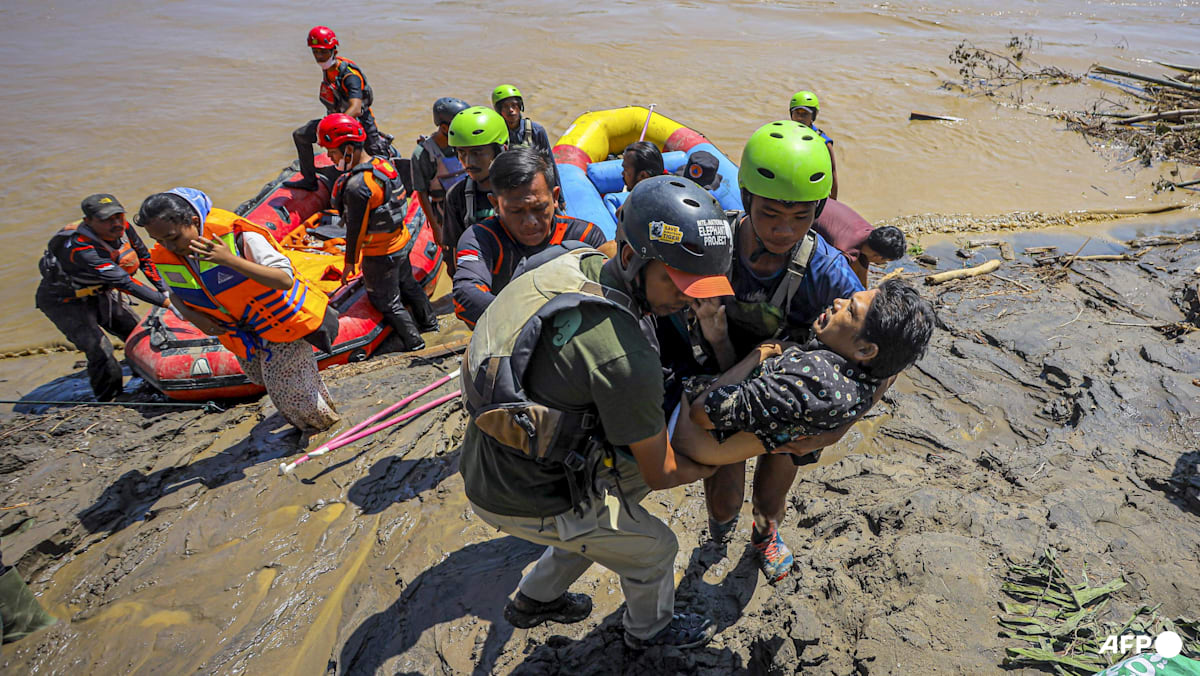
JAKARTA: As parts of Southeast Asia reel from the effects of deadly flooding over recent days, Indonesia faces a significantly higher death toll than its regional neighbours.
As of Sunday (Dec 7), the archipelago recorded at least 940 deaths, 276 people missing and around 5,000 people injured, in one of the deadliest disasters to hit the country in the past few years.
Thailand and Malaysia, which were also hit by the after-effects of Cyclone Senyar, reported death tolls of around 276 and three respectively.
And while the rare storm that formed in the Malacca Strait has largely passed, Indonesia continues to struggle heavily with the aftermath.



Experts told CNA that the higher number of casualties in Indonesia cannot just be explained away by its larger population of over 280 million. Thailand has a population of around 71 million and Malaysia has a population of around 34 million.
Instead, a mix of extensive deforestation, poor spatial planning, weak disaster preparedness and geographical vulnerability contributed to the devastation, all compounded by the effects of climate change.
“Indonesia is highly susceptible to landslides and flash floods, particularly because of its tectonic and geological conditions and its highly unstable atmospheric conditions,” said Dwikorita Karnawati, an environmental geology and disaster mitigation expert from the University of Gadjah Mada.
“Even without external factors … it is already fragile, let alone if there is land clearing and there is inappropriate land use.”
Indonesia sits at the convergence of major tectonic plates making it part of the “Ring of Fire,” vulnerable to heavy tropical rainfall and natural disasters.
And as analysts warn that climate change will lead to more frequent weather anomalies in the years to come, they say the government must be better prepared and train people to avoid the worst.
Source: CNA