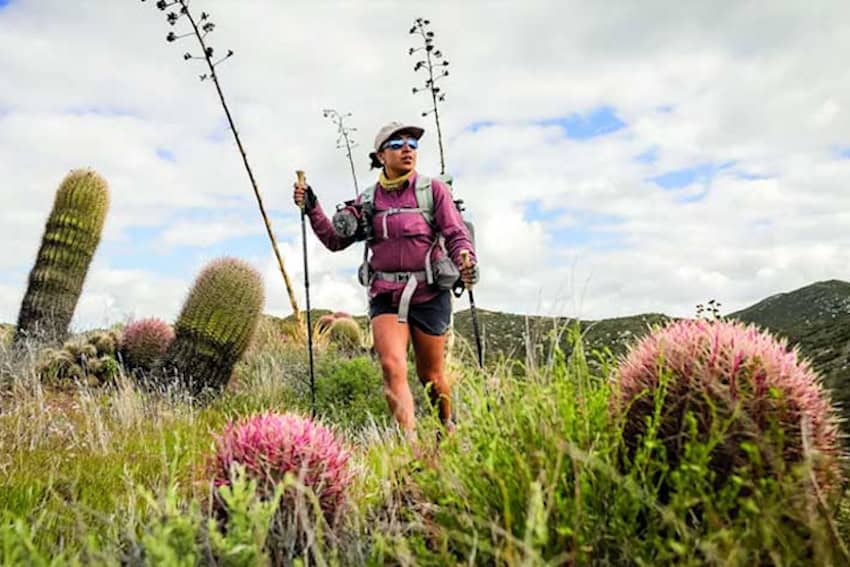
“I’ve been working on this project for seven years,” says Mexican long-distance thru-hiker Zelzín Aketzalli. “It will be a world-class trail running the entire length of Baja California: over 2,000 kilometers long. Those who walk it will discover that Baja is much more than beach, that it has snow-capped mountains, volcanoes, canyons, pine forests, salt flats and desert. In fact, it has plants, trees, and animal life that exist nowhere else.”
The project Aketzalli is talking about will connect the Pacific Crest Trail with the new National Trail of Baja California, “empowering the region’s most iconic mountain ranges and its native communities,” she says.
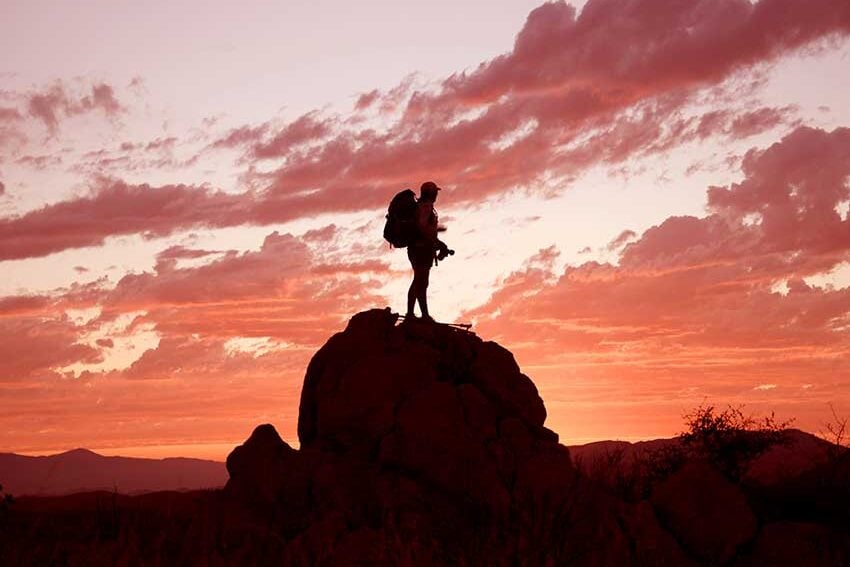
To create the trail, Aketzalli has been bushwhacking since October, starting from Tecate, visiting remote mountains, valleys, and canyons and plotting routes that will be interesting, challenging, and satisfying to future generations of long-distance hikers.
Although aligning the trail with Mexico’s historic Camino Real had been considered, Aketzalli’s chosen route follows mountain paths, avoiding highways while bringing hikers closer to Indigenous communities that can offer food, shelter and guidance.


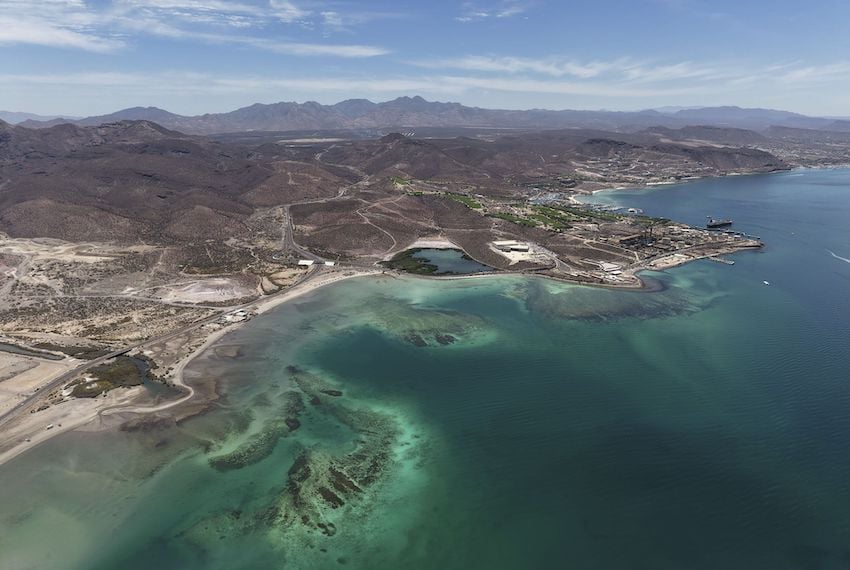
Bushwhacking in BC
When she began her odyssey on October 19, she got a big send-off in Tecate by Baja California community leaders. Since then, she has been hard at work in designing the trail.
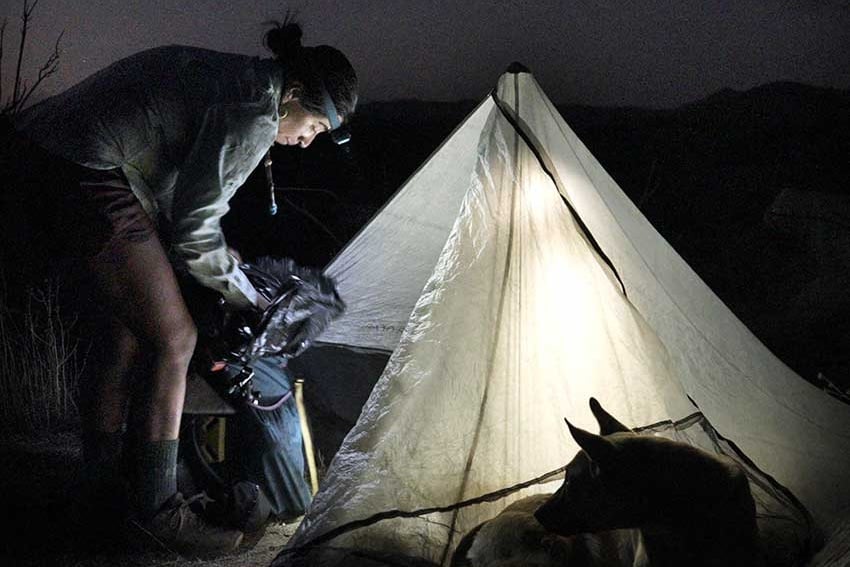
“I spend a few days planning my strategy for the next section of the route, most nights camping in the mountains,” said Aketzalli. “And then I spend a few more days meeting and talking with the people in the nearby pueblitos and ranchos. This has become my new routine. It’s a different and deeply enriching way to experience thru-hiking.”
Simultaneously, Quetzal — her trail name — is recording footage for a feature-length documentary film on her creation of the Baja California trail.
“When people see what I’ve filmed,” she said, “they’re convinced I must have a camera operator marching along behind me, but I don’t. I’ve worked out techniques for getting the shot I need, which means I sometimes have to go up and down the same mountain five times.”
Aketzalli is by profession an engineer and for years has applied her talents to the construction and maintenance of hiking trails, including the technically challenging Hanging Lake Trail in Glenwood Springs, Colorado.
Crisscrossing the U.S.… on foot
Aketzalli hails from Mexico City, where she first took up long-distance mountain biking. In 2017, however, she decided to have a go as a hiker on the 4,270-kilometer US Pacific Crest Trail.
This, she realized immediately, was what she was meant to do.
She went on to hike the Appalachian Trail (3,531 km) and the Continental Divide Trail (4,844 km), becoming the first — and so far only — Mexican to achieve the Triple Crown of U.S. hiking.
Today, Aketzalli offers courses in thru-hiking — meaning doing an entire trail in one go — and is fully committed to making long-distance trails a reality in Mexico. She estimates that her present trail reconnaissance will take at least another four months to complete.
Film festival winner
At the end of November, Aketzalli interrupted her Baja trek and flew to Guadalajara to attend a special short-film festival hosted by Cineforo UDG. Among the participants was the documentary “Zelzin, Huellas que Inspiran” (“Zelzin, Footprints that Inspire”).
The film was shot on the Iztaccíhuatl volcano and its surrounding central Mexico landscapes,. The documentary intertwines Aketzalli’s personal journey — growing up in a violent neighborhood in Mexico City — with her achievements in the natural world, to tell a story about resilience and empowerment.
“We won!” said Zelzin. “There were so many excellent entries in this festival… but we won! Making this cortometraje (short film) was difficult because at the same time, I was the protagonist, the producer and the director. For me, this film must be out there for all to see, just as the Baja Trail Project is getting underway.”
Aketzalli is now applying the experience she gained from producing her prize-winning short to filming her groundbreaking trek through the wilds of Baja California.
“It will be a full-length documentary on this most amazing peninsula,” she said, “but I’m definitely paying a heavy price for it. A thru-hiker’s backpack is usually very light, mostly containing food and water. Here in Baja, instead, I’m carrying all sorts of things you need to produce good cinema. I can’t believe I’m actually toting a tripod!”
What can future trekkers hope to see while following Aketzalli’s route through Baja California? For sure they certainly will be fascinated by the boojum tree, found almost exclusively in Baja’s Valle de los Cirios (Valley of the Candles).
Early 20th-century botanist Joseph Nelson Rose noted the boojum’s “grotesque, columnar form, rising improbably from the rocky soil,” and he compared its silhouette to a giant inverted carrot, highlighting its eccentricity among desert plants. For another botanist, Townsend Branegee, the boojum looks more like a candle (cirio), “unlike any other in the desert.”
According to the international nonprofit organization Wildcoast, Valle de los Cirios is globally unique.
“There may be no other place that embodies the wild Pacific coastal landscapes of the Baja California peninsula,” it says on its website. “With some luck and a lot of patience, a visitor can catch glimpses of mule deer, kit foxes, bobcats, and stealthy mountain lions that wander among the giant cardon cactus and fantastical cirios, or boojum, trees.”
Gigantic rock-art murals
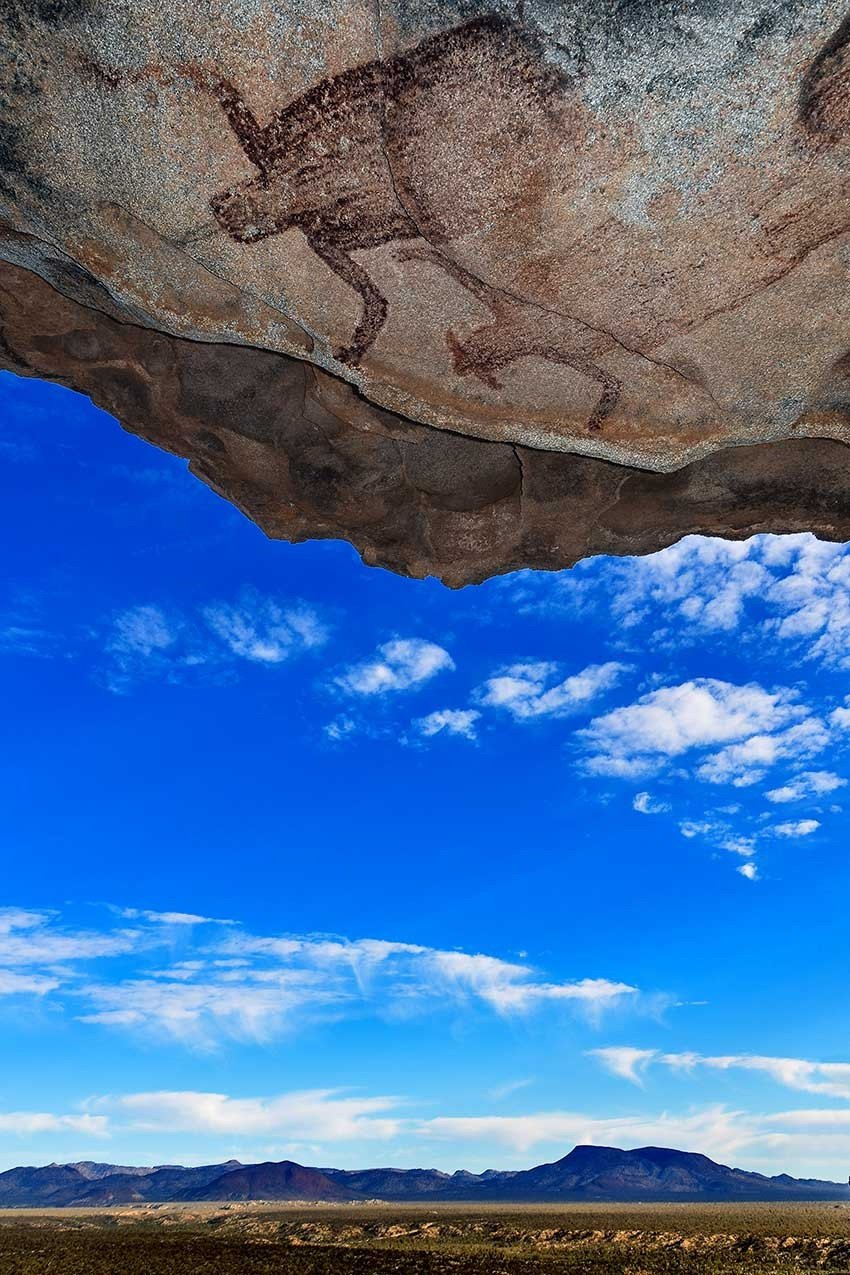
For geologist Carlos Lazcano, the 120-kilometer stretch between the missions of San Ignacio and Santa Gertrudis is particularly impressive.
“The canyons are spectacular, and the Sierra de San Francisco shelters ancient rock-art sites with gigantic murals, some over 10 meters wide.”
Another region on the planned trail recommended by Lazcano is Cataviña, a geological and ecological marvel which features “dramatic canyons of white granite hiding turquoise pools of water.”
Irresistible sands
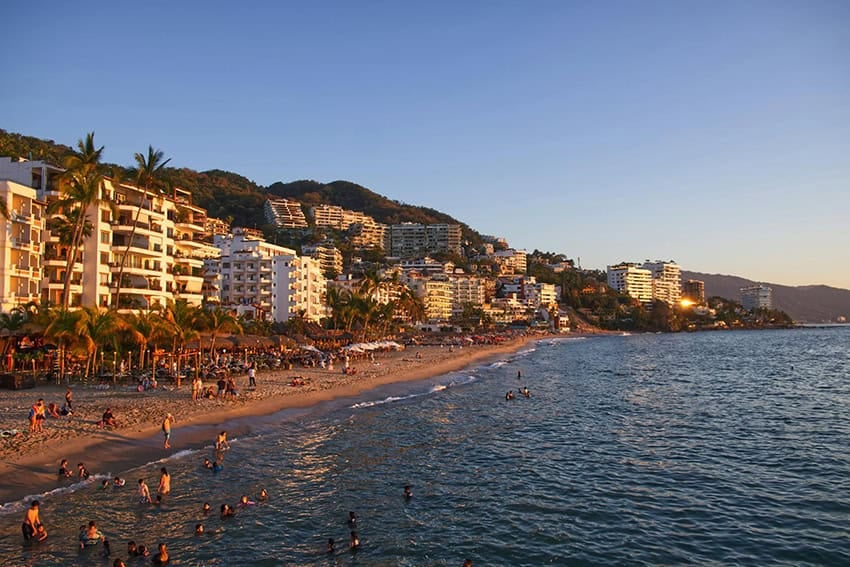
And then there’s the Baja beach. It is so enticing that British schoolteacher Graham Mackintosh couldn’t stop following it. He stepped onto the beach in the 1980s, fell in love with it and then kept on walking — for 4,800 kilometers. To really appreciate those Baja sands, I suggest you read his book, “Into a Desert Place.”
To follow Zelzín Aketzalli’s progress down the Baja California peninsula, occasionally check her on Instagram at @zelzin_aketzalli
John Pint has lived near Guadalajara, Jalisco, for more than 30 years and is the author of “A Guide to West Mexico’s Guachimontones and Surrounding Area” and co-author of “Outdoors in Western Mexico.” More of his writing can be found on his website.
Source: Mexico News Daily