🏛️ Places
Cities, countries, and notable locations

Alcatraz is a small island in San Francisco Bay, formerly home to a notorious federal prison, now preserved as a popular historical tourist attraction.

Angel Falls is a waterfall in Venezuela recognized as the tallest uninterrupted waterfall in the world, plunging from a remote table-top mountain in the Amazon rainforest.

Angkor Wat is a vast temple complex in Cambodia, originally built as a Hindu temple in the early 12th century, and the largest religious monument in the world by land area.

Antelope Canyon is a slot canyon in Arizona, USA, renowned for its smooth, flowing sandstone walls and dramatic light beams that occur during certain times of day.

Auschwitz was a network of Nazi concentration and extermination camps in occupied Poland during World War II, where over a million people were murdered, now preserved as a memorial and museum.

Bagan is an ancient city in Myanmar containing thousands of Buddhist temples and pagodas, representing one of the most significant concentrations of Buddhist architecture in the world.

Big Ben is the nickname for the Great Bell of the clock at the Palace of Westminster in London, becoming an iconic symbol of Britain recognized worldwide.

Borobudur is a massive 9th-century Buddhist temple in Indonesia, the largest Buddhist monument in the world, featuring intricate carved reliefs and hundreds of Buddha statues.

Bryce Canyon is a national park in Utah, United States, famous for its distinctive red rock spires called hoodoos formed through unique geological erosion processes.

Buckingham Palace is the official London residence of the British monarch, serving as a significant center of British royal ceremony and administration.

Burj Al Arab is a luxury hotel in Dubai, United Arab Emirates, known for its distinctive sail-shaped design and status as one of the world's most luxurious hotels.

Burj Khalifa is a skyscraper in Dubai, United Arab Emirates, holding the record as the tallest building in the world since its completion in 2010.

Central Park is a large urban park in Manhattan, New York City, opened in 1858 and representing one of the most visited urban parks in the United States.

Chaco Canyon is an archaeological site in New Mexico, United States, featuring extensive ancient Puebloan ruins reflecting sophisticated pre-Columbian architecture and astronomy.

Chartres Cathedral is a medieval Gothic cathedral in France renowned for its well-preserved stained glass windows and architectural influence on subsequent Gothic buildings.

Chichen Itza is a large complex of ancient Mayan ruins in the Yucatán Peninsula of Mexico, renowned for its step pyramid, El Castillo, and remarkable astronomical alignments.
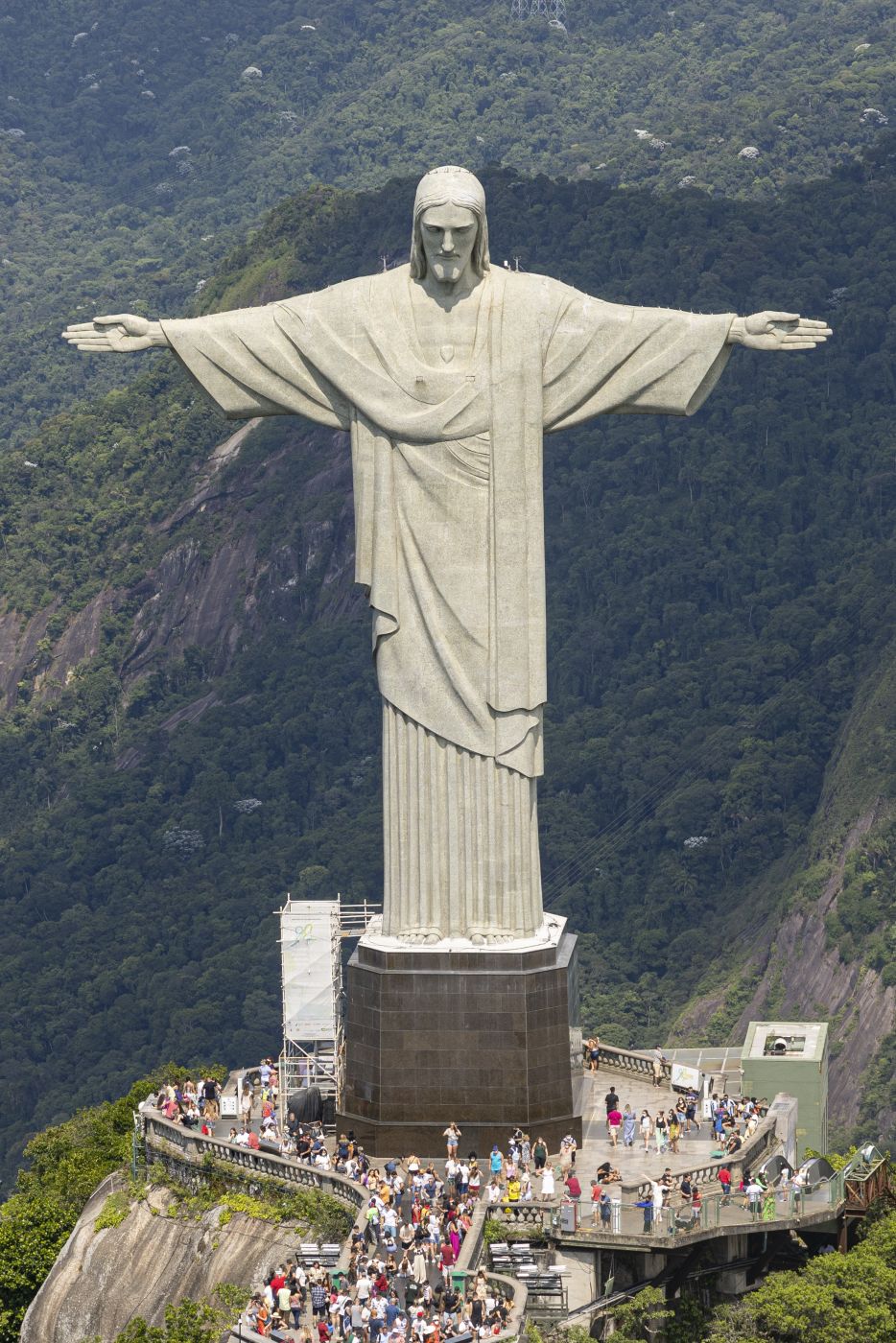
Christ the Redeemer is a massive Art Deco statue of Jesus Christ overlooking Rio de Janeiro, Brazil, from atop Corcovado mountain, and one of the most recognizable religious monuments in the world.

The CN Tower is a communications and observation tower in Toronto, Canada, completed in 1976 and remaining one of the tallest freestanding structures in the Western Hemisphere.

The Colosseum is an ancient amphitheater in the center of Rome, the largest ever built, once used for gladiatorial contests and public spectacles that could draw tens of thousands of spectators.

Delphi is an ancient archaeological site in Greece, historically home to the significant Oracle of Delphi and considered by ancient Greeks to be the center of the world.

The Dome of the Rock is an Islamic shrine located in Jerusalem's Old City, notable for its distinctive golden dome and significant religious importance in Islam.

The Eiffel Tower is a wrought-iron lattice tower in Paris, France, built as the entrance arch for the 1889 World's Fair and now one of the most recognizable structures in the world.

Ellis Island is a historic immigration processing station in New York Harbor, through which over 12 million immigrants entered the United States between 1892 and 1954.

Ephesus is an ancient Greek and later Roman city located in present-day Turkey, once one of the largest cities in the ancient Mediterranean world, now a significant archaeological site.