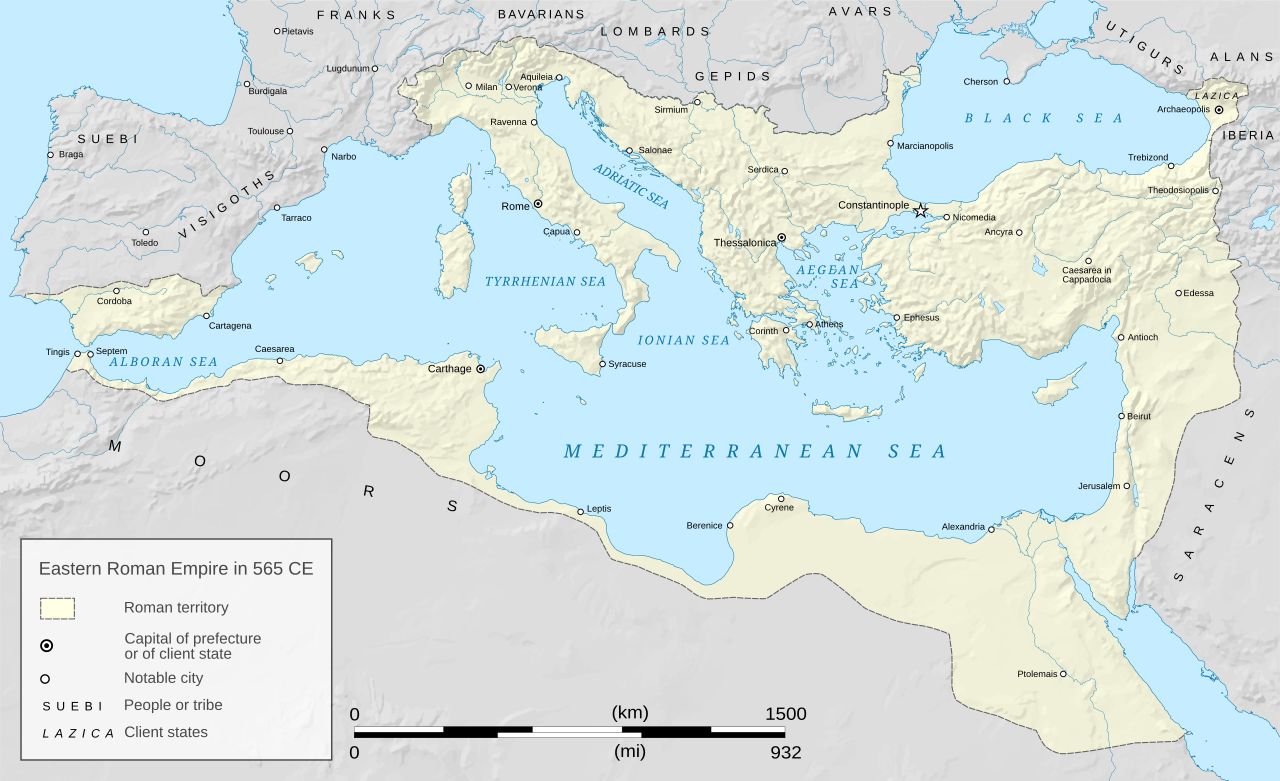
The Byzantine Empire
The Byzantine Empire was the eastern continuation of the Roman Empire, surviving for a thousand years after the fall of Rome in the west and preserving classical knowledge through the Middle Ages.
While the western half of the Roman Empire collapsed amid invasions in the 5th century, its eastern counterpart not only survived but thrived for another thousand years, becoming a distinct civilization in its own right.
Continuing Rome in the East
The Byzantine Empire began as the eastern half of the Roman Empire, centered on Constantinople, and continued functioning as a distinct political entity for a millennium after Rome itself fell in 476 CE.
Preserving Classical Knowledge
Byzantine scholars preserved vast amounts of ancient Greek and Roman texts throughout the medieval period, knowledge that would later help fuel the European Renaissance once it reached the West.
A Center of Orthodox Christianity
The empire became the heart of Eastern Orthodox Christianity, with its distinctive religious traditions and elaborate church architecture, including the Hagia Sophia, shaping Christian practice across Eastern Europe and Russia.
Centuries of Conflict
The empire faced repeated invasions and conflicts over its long history, including damaging clashes with Crusader armies from Western Europe, which sacked Constantinople itself in 1204.
The Fall of Constantinople
The Byzantine Empire finally ended in 1453, when Ottoman forces under Sultan Mehmed II captured Constantinople, an event widely regarded as marking the end of the medieval period in European history.