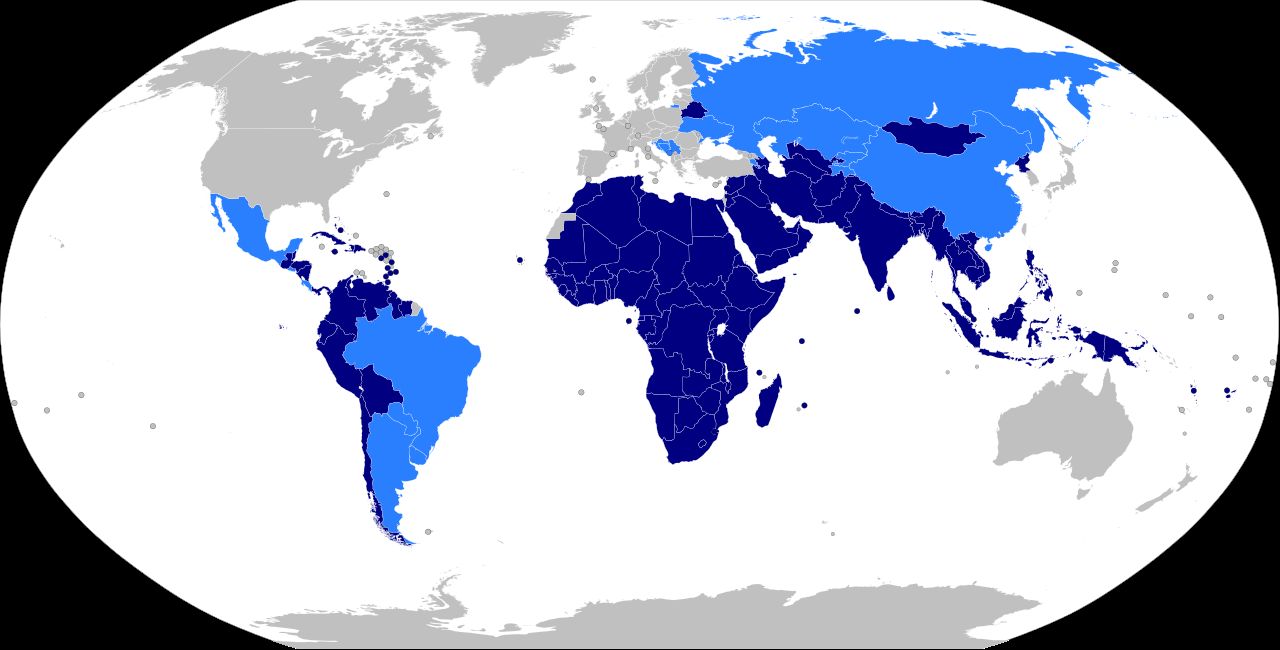
The Non-Aligned Movement
The Non-Aligned Movement is an international organization of states formally established in 1961 that declined to formally align with either the United States or Soviet Union during the Cold War.
Rejecting the binary choice between two competing Cold War superpowers, this movement of predominantly newly independent nations sought to chart an independent course amid intense global ideological pressure.
Rejecting Cold War Alignment
The Non-Aligned Movement formed among countries declining to formally align with either the United States or Soviet Union during the intense ideological pressures of the Cold War.
Founding Leaders
The movement was significantly shaped by leaders including India's Jawaharlal Nehru, alongside leaders from Yugoslavia, Egypt, Indonesia, and Ghana at its founding.
Representing Newly Independent Nations
The movement drew significant membership from newly independent nations emerging from decolonization, seeking an alternative path to Cold War superpower alignment.
Continuing Relevance
The Non-Aligned Movement continues to exist today, though its original Cold War-era purpose has evolved as global geopolitics have significantly changed since its founding.