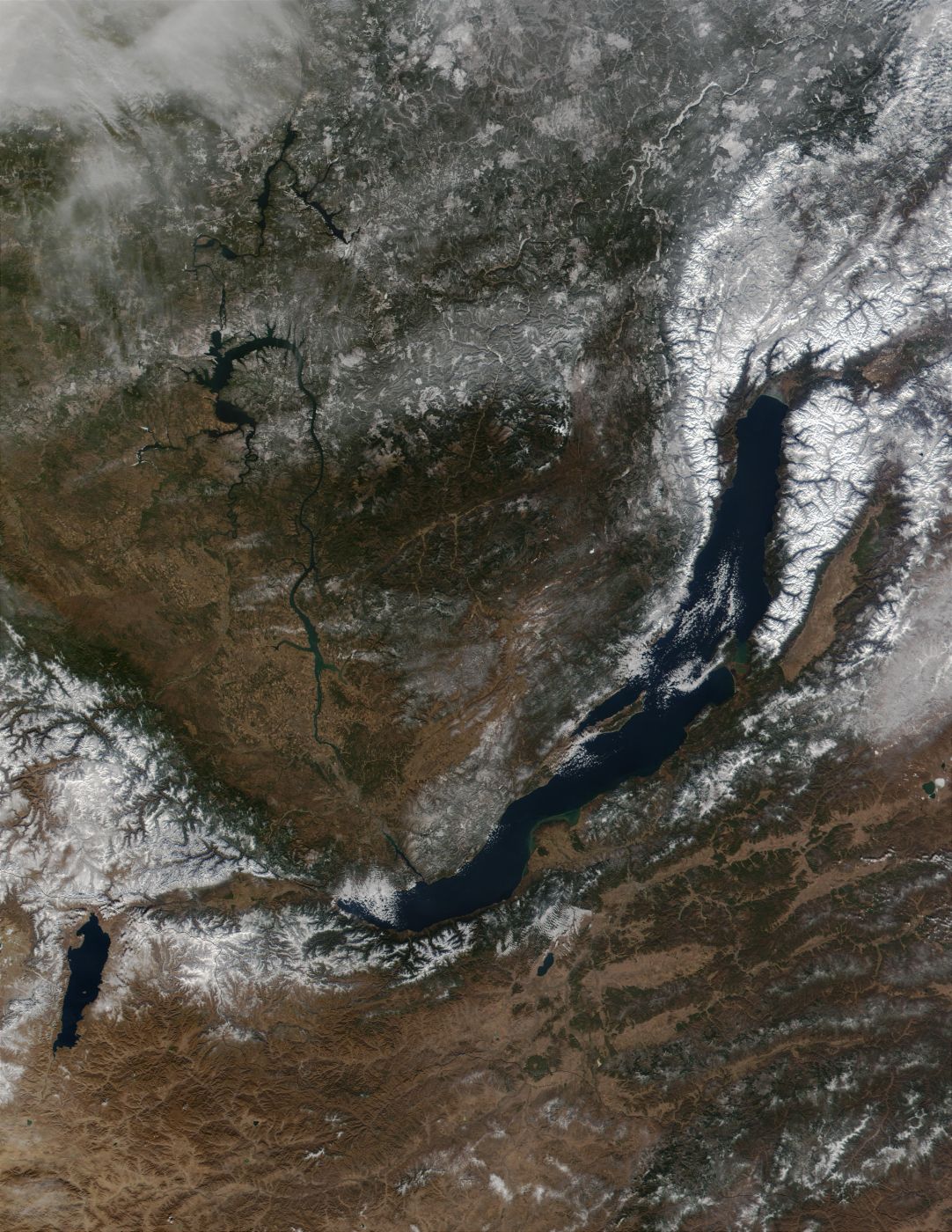
Top 10 Deepest Lakes in the World
A ranked look at the ten deepest lakes on Earth, from Siberia's ancient Lake Baikal to a hidden lake sealed beneath two miles of Antarctic ice, each formed by tectonic rifting, glacial carving, or volcanic collapse.
- 1. Lake Baikal — 1,642 meters (5,387 feet)
- 2. Lake Tanganyika — 1,470 meters (4,823 feet)
- 3. Caspian Sea — 1,025 meters (3,363 feet)
- 4. Vostok Lake — approximately 510 meters (1,674 feet) of water depth
- 5. Lake General Carrera (Buenos Aires) — 586 meters (1,923 feet)
- 6. Lake Malawi — 706 meters (2,316 feet)
- 7. Issyk-Kul — 668 meters (2,192 feet)
- 8. Great Slave Lake — 614 meters (2,014 feet)
- 9. Crater Lake — 592 meters (1,943 feet)
- 10. Lake Matano — 590 meters (1,936 feet)
- A Note on Rankings
The world's deepest lakes were not formed gently. Tectonic rifts tore the Earth's crust apart, glaciers gouged out bedrock over millions of years, and collapsing volcanoes left behind craters that slowly filled with rain. The result is a list of ten natural basins that plunge deeper than any others on the planet, each with its own story of geology, biology, and, in one case, complete isolation from the outside world for millions of years.
1. Lake Baikal — 1,642 meters (5,387 feet)

Location: Siberia, Russia. Lake Baikal is both the deepest and the oldest lake on Earth, formed roughly 25 million years ago within an active rift zone that continues widening by about 2 centimeters a year. It holds an estimated 20% of the world's unfrozen surface fresh water, more than all five of North America's Great Lakes combined. More than half of its 2,500-plus recorded species, including the Baikal seal, are found nowhere else on Earth.
2. Lake Tanganyika — 1,470 meters (4,823 feet)

Location: Tanzania, DRC, Burundi, Zambia. The second-deepest lake in the world is also the longest freshwater lake on Earth, stretching roughly 420 miles across the borders of four Central African nations. Human communities have fished its shores since the Stone Age, and it remains one of the most biodiverse freshwater lakes anywhere, hosting hundreds of unique cichlid fish species.
3. Caspian Sea — 1,025 meters (3,363 feet)

Location: Russia, Kazakhstan, Iran, Azerbaijan, Turkmenistan. Despite its name, the Caspian is technically the largest lake on Earth by surface area, a geological remnant of the ancient Tethys Ocean. Bordered by five nations and sitting atop substantial oil and gas reserves, it remains a significant source of both economic value and regional geopolitical tension.
4. Vostok Lake — approximately 510 meters (1,674 feet) of water depth

Location: Antarctica. Vostok is a subglacial lake buried beneath roughly 2.2 miles of solid ice, isolated from the atmosphere for an estimated 15 to 25 million years. Its existence was only confirmed through ice-penetrating radar in the 1990s, and scientists continue studying whether it harbors microbial life that has evolved in total isolation.
5. Lake General Carrera (Buenos Aires) — 586 meters (1,923 feet)

Location: Chile and Argentina. Known by different names on either side of the border, this glacially fed Patagonian lake is famous for its brilliant turquoise water and the naturally sculpted Marble Caves rising from its shoreline, accessible only by boat.
6. Lake Malawi — 706 meters (2,316 feet)

Location: Malawi, Mozambique, Tanzania. Part of the East African Rift system, Lake Malawi hosts more fish species than any other lake in the world, an estimated 1,000 or more, making it one of the most important living laboratories for studying evolution. Its deep water is meromictic, forming distinct layers that never mix.
7. Issyk-Kul — 668 meters (2,192 feet)

Location: Kyrgyzstan. One of the largest alpine lakes in the world, Issyk-Kul sits over 5,200 feet up in the Tian Shan mountains yet never freezes, a fact reflected in its name, which translates to "warm lake." It served as a waypoint along the ancient Silk Road.
8. Great Slave Lake — 614 meters (2,014 feet)

Location: Northwest Territories, Canada. The deepest lake in North America freezes solid enough each winter to support constructed ice roads carrying truck traffic to remote communities. Yellowknife, the territorial capital, sits directly on its northern shore.
9. Crater Lake — 592 meters (1,943 feet)

Location: Oregon, United States. The deepest lake in the U.S. fills the collapsed caldera of Mount Mazama, a volcano that erupted and collapsed roughly 7,700 years ago. With no rivers flowing in or out, the lake is fed entirely by rain and snowmelt, giving it exceptional clarity and its famous deep blue color.
10. Lake Matano — 590 meters (1,936 feet)

Location: Sulawesi, Indonesia. Indonesia's deepest lake and the world's deepest lake located on an island, Lake Matano formed within a tectonic graben and hosts unique endemic species, including transparent fish found nowhere else. It faces growing environmental pressure from nearby nickel mining operations.
A Note on Rankings
These rankings reflect the most widely cited maximum-depth measurements for named natural lakes. Because some remote and subglacial lakes have not been comprehensively surveyed, exact figures and rankings can vary slightly by source.