Cellular Respiration
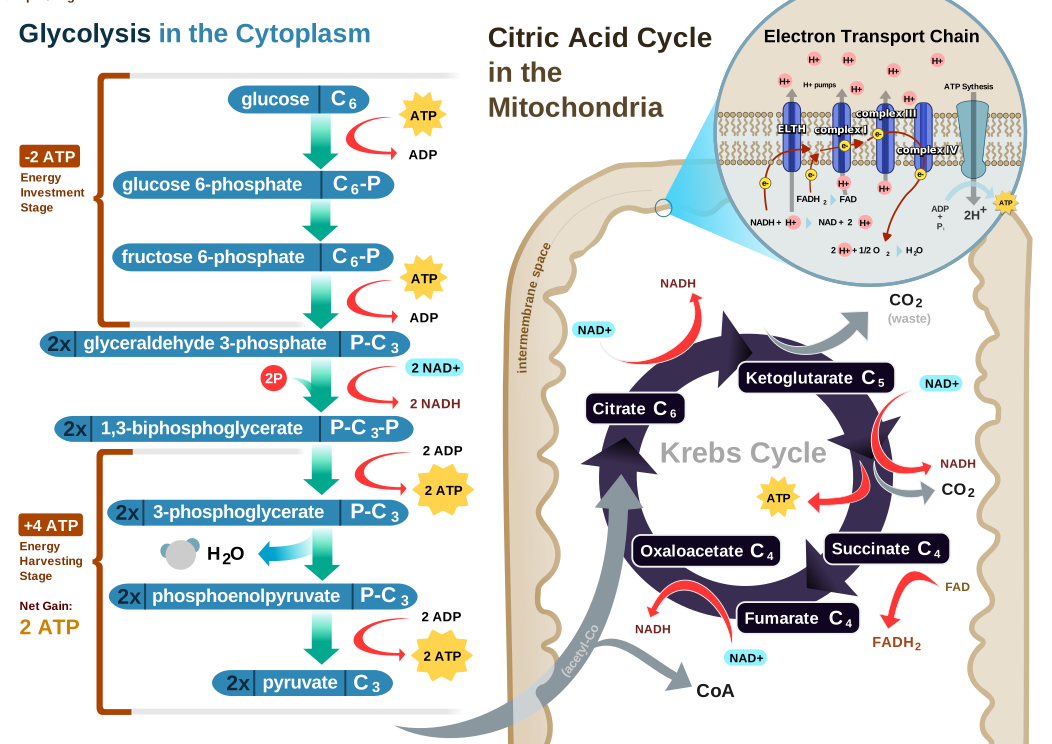
Cellular Respiration is the biological process by which cells convert nutrients into usable energy, occurring in nearly all living organisms and serving as a fundamental counterpart to photosynthesis.
Powering essentially every biological process in nearly every living organism on Earth, this fundamental process converts the food we eat into the usable energy our cells actually require to function.
Converting Nutrients into Energy
Cellular respiration converts nutrients, primarily glucose, into usable cellular energy in the form of ATP, powering virtually all cellular processes.
Occurring in the Mitochondria
In complex organisms, cellular respiration occurs primarily within mitochondria, specialized cellular structures often called the "powerhouse" of the cell.
A Counterpart to Photosynthesis
Cellular respiration serves as a biological counterpart to photosynthesis, with the two processes together forming a crucial cycle of energy and gas exchange in Earth's ecosystems.
A Universal Process
Cellular respiration occurs in nearly all living organisms, from simple bacteria to complex animals, reflecting its fundamental importance to life itself.