Plate Tectonics
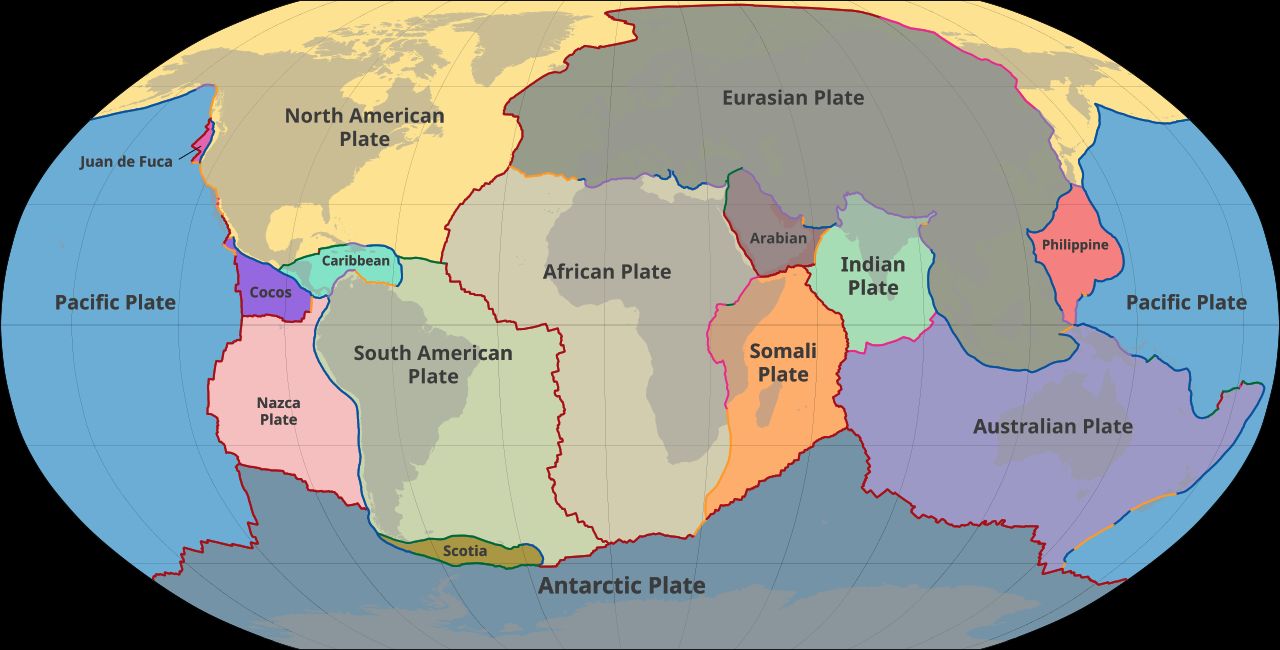
Plate Tectonics is the scientific theory describing how Earth's outer shell is divided into large moving plates, explaining phenomena including earthquakes, volcanoes, and the formation of mountain ranges.
Explaining why continents seem to fit together like puzzle pieces and why earthquakes cluster in predictable zones, this unifying theory transformed geology from a largely descriptive science into one with genuine predictive power.
A Shell of Moving Plates
Plate tectonics describes Earth's outer layer as divided into several large, rigid tectonic plates that float and slowly move atop the more fluid mantle layer beneath them.
Explaining Continental Drift
The theory provided a scientific mechanism explaining earlier observations of continental drift, showing how continents that once fit together like puzzle pieces gradually separated over millions of years.
Explaining Earthquakes and Volcanoes
Plate tectonics explains why earthquakes and volcanic activity concentrate along specific zones where tectonic plates meet, collide, or slide past one another.
A Unifying Framework for Geology
The theory, fully developed by the 1960s, unified previously disparate geological observations into a single coherent framework, fundamentally transforming the field of Earth science.