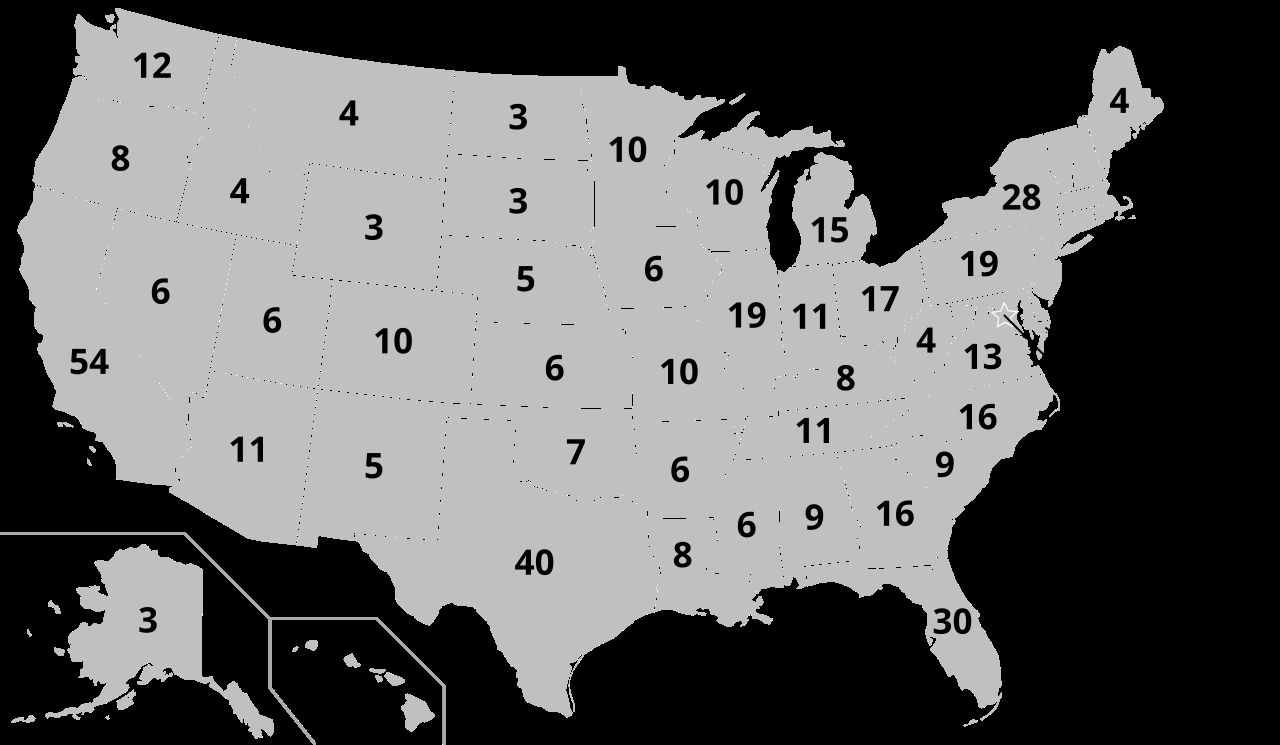
The Electoral College
The Electoral College is the constitutional mechanism through which the United States formally elects its president, involving state-based electors rather than a direct national popular vote.
Rather than electing its president through a direct national popular vote, this constitutional mechanism instead relies on state-based representatives, an arrangement that has occasionally produced results diverging from the popular vote.
An Indirect Presidential Election System
The Electoral College establishes an indirect system for electing the U.S. president, in which voters technically select state electors who then formally cast votes for president.
State-Based Elector Allocation
Each state receives a number of electors based roughly on its congressional representation, with most states awarding all their electors to whichever candidate wins that state's popular vote.
Occasional Divergence from the Popular Vote
The system has occasionally produced results where a candidate wins the Electoral College, and therefore the presidency, despite losing the national popular vote, generating significant ongoing debate.
Ongoing Reform Debates
The Electoral College remains a subject of significant ongoing political debate, with various reform proposals discussed though none have achieved the constitutional amendment required for elimination.