The Theory of Relativity
The Theory of Relativity, developed by Albert Einstein, revolutionized understanding of space, time, and gravity, revealing that they are interconnected rather than fixed and absolute.
Overturning centuries of assumptions about the fixed, absolute nature of space and time, this theory revealed instead a universe where measurements of both depend fundamentally on the observer's own motion.
Special Relativity
Einstein's special theory of relativity, published in 1905, established that the laws of physics are the same for all non-accelerating observers, and that the speed of light is constant regardless of the observer's motion.
General Relativity
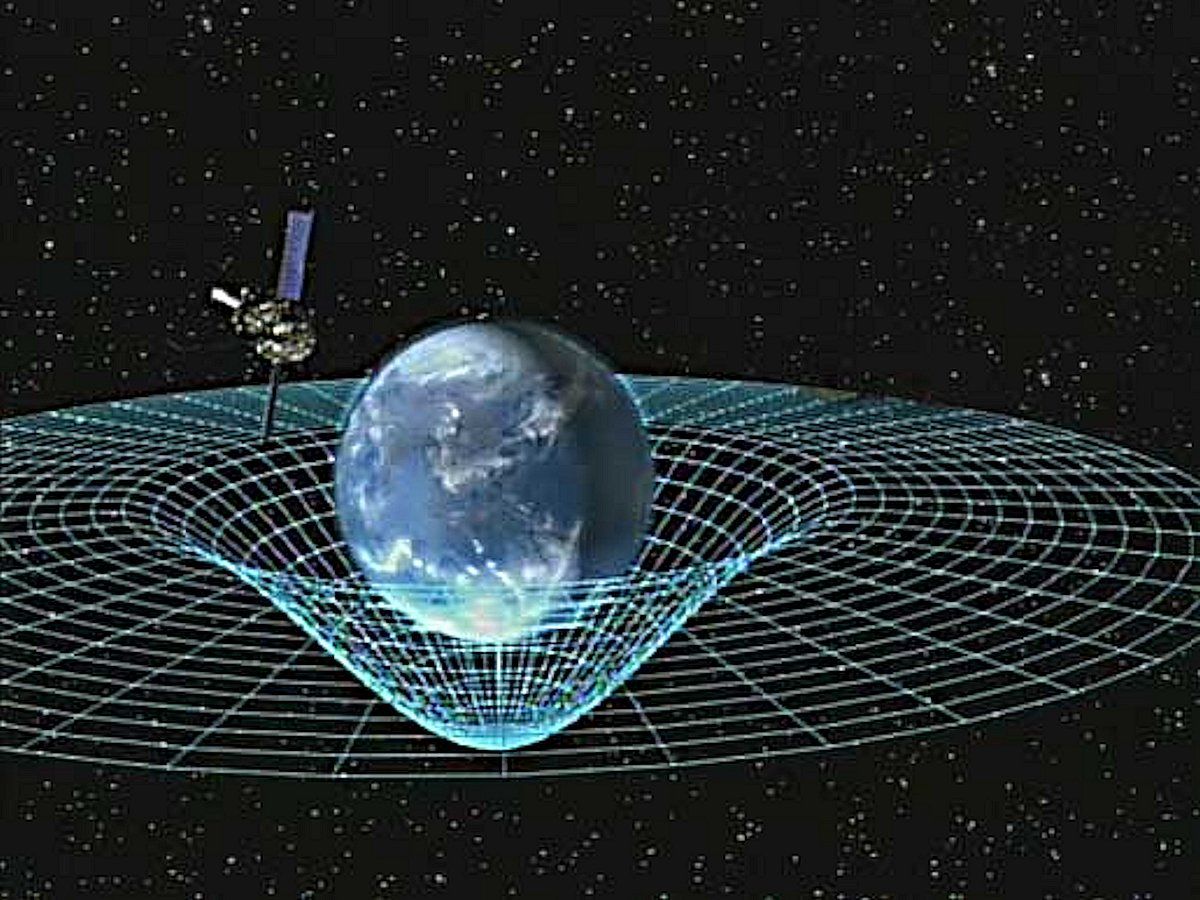
Einstein's later general theory of relativity, published in 1915, extended these ideas to describe gravity as a curvature of spacetime caused by mass, rather than a conventional force.
Confirmed by Observation
General relativity's predictions were dramatically confirmed by observations of a 1919 solar eclipse, which showed light bending around the Sun exactly as Einstein's theory predicted.
Everyday Practical Applications
Relativity's effects on time have practical modern applications, including necessary corrections for GPS satellite systems, which must account for relativistic time differences to maintain accuracy.