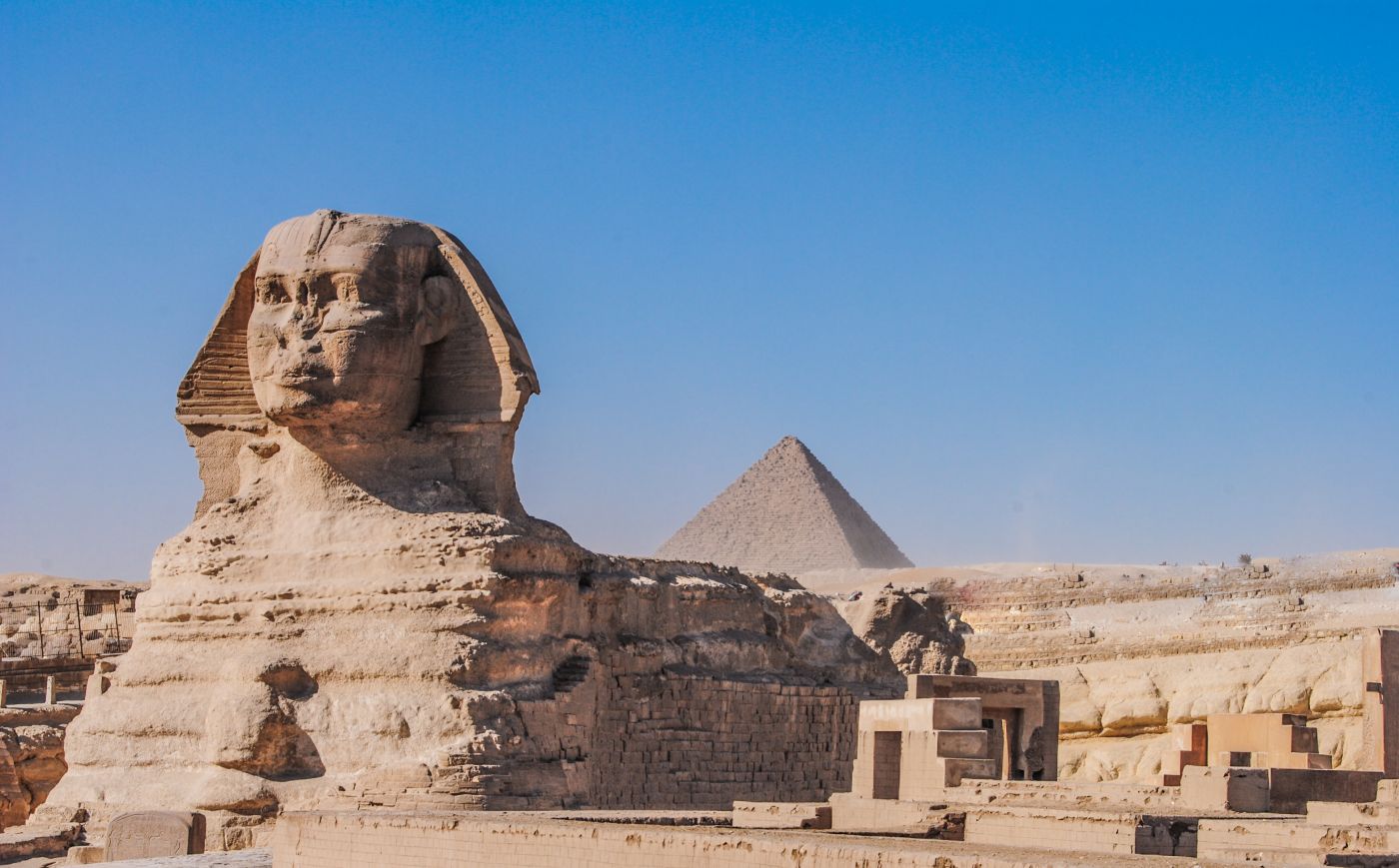
The Great Sphinx of Giza
The Great Sphinx of Giza is an ancient limestone statue with the body of a lion and a human head, located near the Great Pyramids and among the largest and oldest monumental sculptures in the world.
Missing its nose for reasons that remain genuinely disputed among historians, this massive limestone guardian has watched over the pyramid complex for roughly four and a half thousand years.
An Ancient Guardian Statue
The Great Sphinx features the body of a lion and the head of a human, believed by most historians to represent an ancient Egyptian pharaoh, standing guard near the Great Pyramids of Giza.
One of the World's Largest Monolithic Statues
The Sphinx measures approximately 240 feet long and 66 feet tall, carved from a single piece of limestone bedrock, making it one of the largest monolithic statues in the world.
A Missing Nose
The Sphinx's missing nose has been the subject of considerable historical speculation, with theories ranging from deliberate damage during various historical conflicts to natural erosion over millennia.
An Enduring Ancient Mystery
Despite extensive study, several aspects of the Sphinx's original construction and precise purpose remain debated among Egyptologists, adding to its enduring historical and cultural fascination.