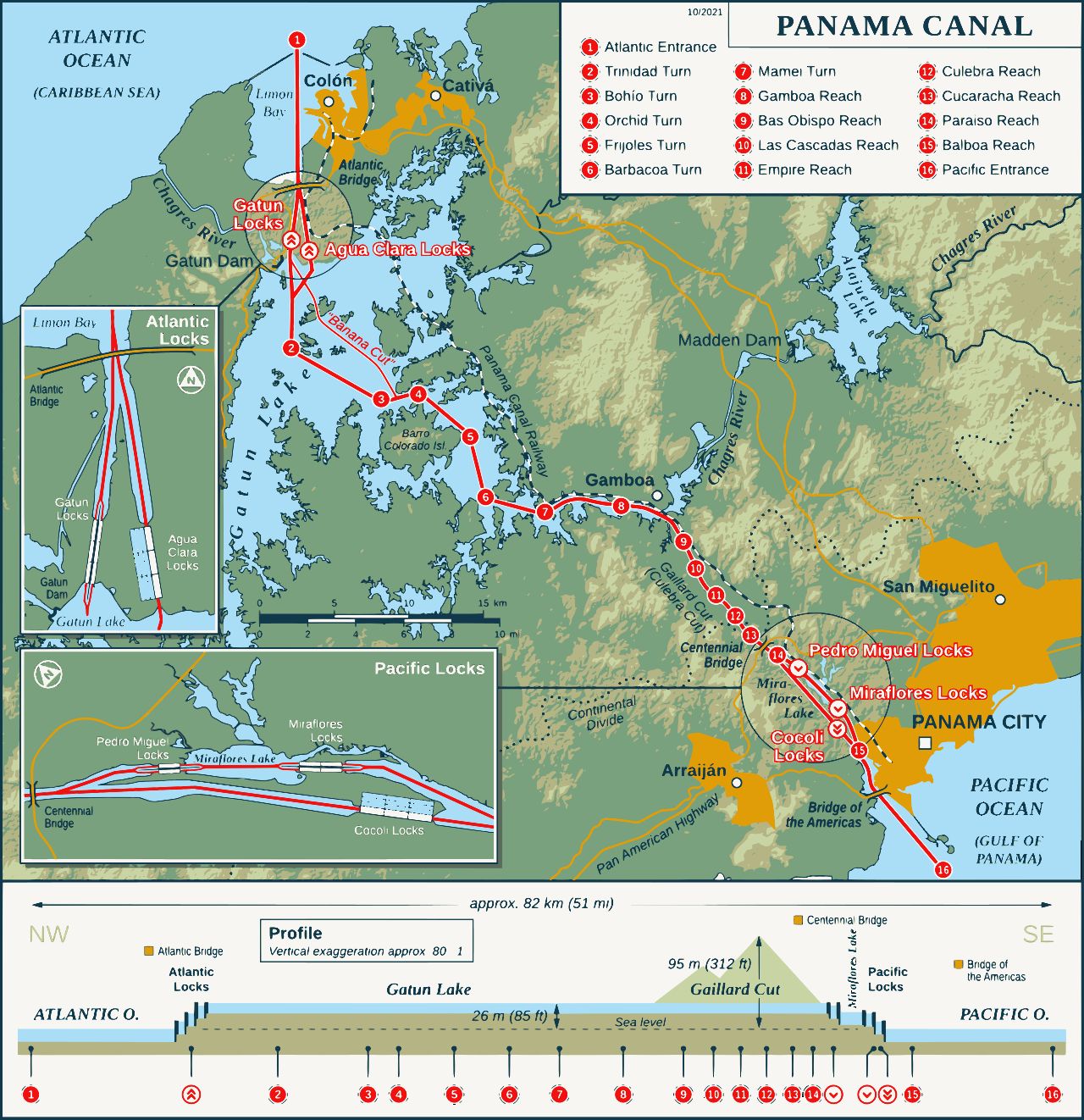
The Panama Canal
The Panama Canal is an artificial waterway connecting the Atlantic and Pacific Oceans through Panama, one of the most significant engineering achievements of the 20th century.
Cutting directly through a narrow strip of land to connect two oceans, this engineering project succeeded only after an earlier French attempt failed catastrophically, claiming tens of thousands of lives to disease and difficult conditions.
Connecting Two Oceans
The Panama Canal provides a crucial shipping shortcut connecting the Atlantic and Pacific Oceans, eliminating the need for ships to travel around the entire South American continent.
A Failed French Attempt
An earlier French effort to build the canal failed catastrophically in the late 19th century, with tens of thousands of workers dying from tropical diseases and construction complications.
American Completion
The United States completed the canal in 1914, successfully addressing the disease and engineering challenges that had doomed the earlier French effort.
A Vital Global Trade Route
The Panama Canal remains one of the world's most vital shipping routes, handling a significant percentage of global maritime trade and undergoing periodic expansion to accommodate larger vessels.